
Seven Things in the Church That Will Not Change

Church SteepleIn this post, Thom Rainer reminds us of what is most important when it comes to the local church body.

Rainer writes:

I love following church trends. I have been researching and consulting with churches for over thirty years. It’s just what I do.

Sometimes I am pretty good about projecting current trends toward a future reality. Of course, I’ve had my share of misses as well. Still, I thoroughly enjoy every facet about studying local churches.

This time, however, I can make a definitive statement. I can tell you seven things in the church that will not change. In the fast pace of change in local congregations, these seven constants are good reminders of what really matters.

1.The Bible is still the Word of God. It always has been and always will be. It is sharper than a two-edged sword. It is powerful because it is the Word of God.

2.The gospel still changes lives. The gospel is the power unto salvation. The gospel transforms lives. The gospel is the same regardless of other changes in our churches.

3.Small groups are still vital. In the New Testament, groups sometimes met together in homes or other places. Throughout Church history, the role of groups has been vital. It is the place where community is established and where deep truths are taught. It has been called Sunday school, small groups, home groups, and cell groups. But they are all forms of small groups creating community and fellowship and learning.

4.The mission field still needs workers. That includes the mission fields to the farthest ends of the earth. And it includes the community in our backyard.

5.Prayer is still powerful. God is still using praying churches. Never, ever take for granted the power of pervasive prayer.

6.Hurting people still need ministry. Pain and hurt may come in different names over the years, but the needs are still similar. A church that truly cares for people will always have a place in the community. A church that sees people through the eyes of Jesus will always be effective.

7.God is still in control. Sometimes the pace of change confuses and disorients us. Sometimes the amount of suffering in the world challenges us. Sometimes we feel like there is no hope. Remember, God is still in control. He always has been; He always will be. He is there for you and your church.

I admit that I often have fun looking at trends and cultural forces that are changing our society and affecting our churches. Such is the bubble in which I often find myself.

But for many, the pace of change is disconcerting if not frightening. It can seem those things that we cherish are changing too fast or even being taken away from us. We all need these reminders that so much of God’s work in His churches will never change. These are the things that really matter. These are the things that really make a difference in our churches and the world in which we minister.

What other reminders can you give us? What are some constants that will never change in our churches? What really does matter?

Source: Seven Things in the Church That Will Not Change

A Day In The Life Of A Pastor

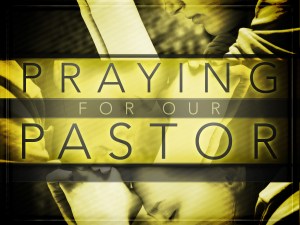
At the end of his post Dr. Thom Rainer extends a challenge to pray for your pastor five minutes a day. If you will commit to this challenge or believe that it is a much-needed ministry, will you please share this on your Facebook page, email the link to all your friends, or have  your church send this to their members. Once you have done these things then pray! Pray for wisdom, discernment, holiness, purity, compassion, vision, and most of all for a Spirit-filled life. You will never know this side of heaven the difference you are making for the kingdom of God.

I hope “A Day In The Life Of A Pastor” by Thom Rainer encourages you to pray for your pastor.

Rainer writes:

It’s Thursday morning. Pastor Doug has a clear calendar, an aberration in his busy schedule. Actually, the calendar is not really clear; he has set aside time to finish his sermon for Sunday. His Bible is open; study aids are nearby. He begins to study.

Then the phone rings.

His assistant tells him about a car accident involving a family in the church. The ambulances are already on the way to the hospital. Doug leaves all of his study material on his desk and jumps into the car.

On the way to the hospital, his assistant calls him again. The entire Godsey family of five was in the car. None are seriously [hurt] except Gary, the father and husband of the family. His condition is grave.

Pastor Doug walks into the emergency waiting room. The family has just been told that their husband and father did not make it. They see their pastor and run to him sobbing, in total shock. Doug is there for them. He stays with the entire family for three hours until he is certain that enough people are around to care for them.

The Afternoon

He stops by his home to see his wife and grab a quick sandwich. It is now afternoon. He’s not sure if he can return to his sermon preparation, but he knows he must. He must fight the emotional exhaustion of the morning, and finish the message. But as he walks back to the church, his assistant apologetically tells him that two people need to speak with him. They consider it urgent.

Doug meets with the two men. One of them is the worship leader of the church. He is struggling with his ministry and is considering giving up. For two hours, Doug listens, consoles, and attempts to encourage the staff member.

The next visitor then catches Doug off guard. George is one of the key lay leaders in the church. Doug considers him a friend and an incredibly vital person in the overall leadership of the congregation. George struggles to speak: “My wife is having an affair . . . “  There are no more words for 15 minutes. Just tears and sobs.

Doug stays with George for over two hours. They pray together and talk about next steps.

It’s nearly five o’clock in the afternoon. Doug is too drained to attempt to get back to his sermon. Instead he begins to look at his crowded email inbox. He cringes when he sees one of the senders of an email. But he cannot stop himself from opening the message. It’s from one of Doug’s most frequent critics in the church. She has two complaints. The first irritation was something he said in last Sunday’s sermon. The second complaint addressed Doug’s failure to visit her sister-in-law who had minor outpatient surgery yesterday. The sister-in-law is not a member of the church. And Doug knew nothing about the surgery.

And Now Evening

Pastor Doug shuts the laptop cover and moves to his car slowly. He’ll stop by the house to grab a quick bite to eat. He needs to check on the Godsey family. He will stay with them for a while, but he must leave prior to 7:30, when he is to give the invocation for a local high school basketball game.

Several people get his attention at the game, so he doesn’t get home until after nine o’clock. He goes to his small study in his home, shuts the door, and begins to cry.

Gary Godsey, the father and husband who was killed in the car accident, was Doug’s best friend.

This was the first chance Doug had to grieve.

A Call to Pray for Pastors

The story is true. Only the names have been changed.

In a few weeks, I will be initiating a call for church members to pray five minutes a day for their pastors. Will you make a commitment today, even before the initiative? Will you commit just five minutes a day to pray for your pastor? Will you ask others in your church to do so? Will you pray for their strength, protection, wisdom, and families?

Will you pray for just five minutes?

10 Warning Signs of an Inwardly Obsessed Church

As a body of believers, the church has been commissioned to make and develop disciples. In turn, these disciples are to go out into the world to make and develop disciples. Often times church can become too focused on our own needs. When this happens the church building itself becomes the basket which hides the light of Christ to the rest of the world (Matthew 5.14-16).

Thom Rainer shares with us “The Ten Warning Signs of an Inwardly Obsessed Church” to help keep our focus on shining out the light of Christ instead of just lighting our little corner of the church.

Dr. Rainer writes:

Any healthy church must have some level of inward focus. Those in the church should be discipled. Hurting members need genuine concern and ministry. Healthy fellowship among the members is a good sign for a congregation.

But churches can lose their outward focus and become preoccupied with the perceived needs and desires of the members. The dollars spent and the time expended can quickly become focused on the demands of those inside the congregation. When that takes place the church has become inwardly obsessed. It is no longer a Great Commission congregation.

In my research of churches and consultation with churches, I have kept a checklist of potential signs that a church might be moving toward inward obsession. No church is perfect; indeed most churches will demonstrate one or two of these signs for a season. But the real danger takes place when a church begins to manifest three or more of these warning signs for an extended period of months and even years.

  1. Worship wars. One or more factions in the church want the music just the way they like it. Any deviation is met with anger and demands for change. The order of service must remain constant. Certain instrumentation is required while others are prohibited.
  2. Prolonged minutia meetings. The church spends an inordinate amount of time in different meetings. Most of the meetings deal with the most inconsequential items, while the Great Commission and Great Commandment are rarely the topics of discussion.
  3. Facility focus. The church facilities develop iconic status. One of the highest priorities in the church is the protection and preservation of rooms, furniture, and other visible parts of the church’s buildings and grounds.
  4. Program driven. Every church has programs even if they don’t admit it. When we start doing a ministry a certain way, it takes on programmatic status. The problem is not with programs. The problem develops when the program becomes an end instead of a means to greater ministry.
  5. Inwardly focused budget. A disproportionate share of the budget is used to meet the needs and comforts of the members instead of reaching beyond the walls of the church.
  6. Inordinate demands for pastoral care. All church members deserve care and concern, especially in times of need and crisis. Problems develop, however, when church members have unreasonable expectations for even minor matters. Some members expect the pastoral staff to visit them regularly merely because they have membership status.
  7. Attitudes of entitlement. This issue could be a catch-all for many of the points named here. The overarching attitude is one of demanding and having a sense of deserving special treatment.
  8. Greater concern about change than the gospel. Almost any noticeable changes in the church evoke the ire of many; but those same passions are not evident about participating in the work of the gospel to change lives.
  9. Anger and hostility. Members are consistently angry. They regularly express hostility toward the church staff and other members.
  10. Evangelistic apathy. Very few members share their faith on a regular basis. More are concerned about their own needs rather than the greatest eternal needs of the world and community in which they live.

So, how did your church do? Are there areas within your congregation that have become too inwardly focused? Are there ministries that have died but have not been buried because they are a part of the traditions of men? Have programs or events in your church become the sole means of getting people in the door? These are just some of the questions we should be asking ourselves on a regular basis.

When we spend time evaluating the focus of ministries, finances, and programs we can ensure that the church does not turn into a spiritual spa to pamper the membership. Properly evaluating the church allows us to organize a system to minister to the needs of the church, equip the saints for spiritual warfare, and reach the world with the good news of Jesus Christ.

The Power of the Negative

As leaders, there are times we have to make difficult decisions on how to address the mistakes, weaknesses, or shortcomings of others. After taking time to pray and think through the situation, we still find ourselves struggling with how to approach the other person in just the right way. We want them to know how important they are; however, their actions are hurting others and must be dealt with.

The Power of the Negative” is a post which Dr. Thom Rainer calls attention to our need to have a healthy balance when using negative reinforcement.

Rainer writes:

I often turn to Brad Waggoner for leadership advice and wisdom. He serves as executive vice president of LifeWay and, previously, as dean of a graduate school of leadership. He provides me a gentle reminder from time to time on, to use his words, “the power of the negative.”

Indeed I often have to remind myself of this leadership principle.

Understanding the Principle

The principle is simple but profound: Negative reinforcement has 20 times or more power than positive reinforcement.  At first glance, a leader may conclude that speaking and leading negatively is the best path since it is so powerful. To the contrary, unless used wisely, negative words and leadership can demoralize, demotivate, and destroy because of its very power.

While there is a place for negative leadership, it must be used with the greatest of care and discernment.

Examples for All of Us

We all experience the power of the negative, either as givers or recipients. See if you can identify with any of these examples:

  • You speak or preach somewhere and you get twenty compliments and one criticism. Upon which one do you dwell?
  • A husband in anger tells his wife that he is tired of her. Though he has given her over a dozen compliments that week, which one does she remember?
  • A child receives accolades for her good grades that semester. But the dad, upon discovering the child has her first failing grade, tells her “you won’t amount to anything in life at the pace you are going.” Which of the father’s words stick with the child for years if not a lifetime?
  • One coworker points out problems in another coworker’s area. Though the praises have been equal to the criticisms, which have the greatest power?
  • A CEO who has provided mostly steady leadership for a few years has an anger meltdown in front of his direct reports. What facet of his leadership is remembered the most?

A Time to Tear Down, A Time to Build Up

The writer of Ecclesiastes tells us clearly that there are times to be negative and times to be positive (3:3). Indeed there are times for a prophetic voice, a corrective voice, and an admonishing voice. The problem is that the writer of Ecclesiastes does not give us specific instruction on timing and frequency.

Many of us are tempted to exercise the power of the negative too frequently. When we are negative about some other person and event, we are able to look away from ourselves and our own weaknesses and failures. It’s easier to the point the finger of accusation at someone other than ourselves.

Further the power of the negative can be tempting because we often get attention when we do so. I can point to one example clearly on this blog. The article that has received the most views was a negative article I wrote on Jerry Sandusky and the Penn State child sex abuse scandal. I am convinced and convicted that the article was appropriate and timely. But I must ever keep in mind the power that negativity has.

The Power of the Negative and Discernment

The Apostle Paul said these words to a church 2,000 years ago, and they still apply to us today: “Therefore encourage one another and build each other up as you are already doing” (1 Thessalonians 5:11, HCSB). There are indeed times when a prophetic or negative word is in order. There are moments in any leader’s lives, whether a parent, pastor, or president, that the power of the negative should be exercised.

But it should be exercised with wisdom and discernment.

It would seem that the preponderance of our leadership should be one of building up and encouraging. Such leadership can change a family for the good. It can change an organization for the good.

And it might just change the world for good.

Checking For Signs of Life

Most of us are concerned about our health. We try to eat right, exercise, and take preventative measures to ensure a long life. Once a year we have a check-up or a physical to make sure we are as healthy as we seem. If the doctor finds something we endure more tests, procedures, and sometimes surgery to make sure the malady is cured.

How often do we do the same thing for our church? How long has it been since you did a church wide check-up? Have you sat down lately to examine what is and isn’t working? Do you have a ministry that you are hanging on to just because you’ve always done church that way? I believe at least once a year we should sit down with key leadership and talk about the health of the church. This will ensure that we are wisely investing our time, talent, and treasure in that which is making a real difference in the church, community, and our families.

Thom Rainer gives us a clear picture of the trends of healthy churches in America in his post, “Twelve in 2012: Trends in Healthy Churches.” I hope these will help in examining the spiritual condition of your local church family.

Dr. Rainer writes:

1. The churches have a high view of Scripture. A number of research projects over the past four decades point to this trend. Healthy churches have leaders and members who believe the totality of the Bible, often expressed as a view called inerrancy.

2. A large number of church members read the Bible daily. The simplicity of this trend often surprises church leaders. But we can no longer assume that all of the congregants read their Bibles every day. That is a practice that must be encouraged and monitored. In our research on spiritual health of Christian, we found that the highest correlative factor in practicing other healthy spiritual discipline was reading the Bible every day.

3. The churches have a priority and focus on the nations. This priority is manifest in short-term mission trips, in care and adoption of the orphaned, in giving to mission causes, and in the number of congregants who commit their lives to reaching the nations with the gospel.

4. The churches have a missional community presence. The leadership and members do not look at their community as a pool for prospects. Rather, they love their community. They serve their community. The live in their community. They have deep relationships in their community.

5. The congregations have membership that matters. These healthy churches are high expectation churches. Membership is much more than completing a card or walking an aisle. These churches have entry point classes that set the expectations of membership. Church members are expected to serve, to give, to be in small groups, and to be accountable to others. Church discipline is practiced in most of these congregations. Because membership is meaningful, the assimilation rate in these churches is very high.

6. The members are evangelistically intentional. The gospel is central in these healthy churches. As a consequence, the sharing of the good news is natural and consequential. But leaders in these churches do not simply assume that evangelism is taking place. There are constant reminders of the priority of evangelism. There is inherent in many of these churches some type of accountability for ongoing evangelism in a number of contexts.

7. These healthy churches have pastors who love the members. That love is obvious in their words, their actions, and their pastoral concern. It does not mean that a pastor is present for every need of a member of a church member; that is physically impossible. It does mean that the church has a ministry in place that cares for all the members. Above all, though, you can sense intuitively when you walk into these churches that the pastor deeply loves the members, even those who may often oppose him.

8. The churches allow their pastors to spend time in sermon preparation. Our research has confirmed over the years that pastors in healthier churches spend more time in sermon preparation than those in other churches. For that to take place, the congregation must understand the primacy of preaching, and they must be willing for their pastor to forego some areas of activity and ministry so he can spend many hours in the Word.

9. There is clarity of the process of disciple making. Such was the theme of the book, Simple Church, written by Eric Geiger and me. For the healthy churches, the ministries and activities are not just busy work; instead they have a clear purpose toward moving the members to greater levels of commitment toward Christ.

10. These churches do less better. They realize that they can’t be all things to all people; and they shouldn’t have such a flurry of activities that they hurt rather than help families. So the leaders of these congregations focus on doing fewer ministries, but doing those few better than they could with an overabundance of activities.

11. The process of discipleship moves members into ongoing small groups. A member is almost guaranteed to leave the church or become inactive in the church if he or she does not get involved in an ongoing small group. These groups have a variety of names: Sunday school; small groups; home groups; life groups; cell groups; and others. The name is not the issue. The issue is getting members connected to ongoing groups.

12. Corporate prayer is intentional and prioritized. Prayer is not incidental in these churches. The leadership regularly emphasizes the importance and priority of prayer. The congregation is led regularly in times of corporate prayer.

To see the entire post please visit: Twelve in 2012: Trends in Healthy Churches.