God With Us

Have you ever wondered why the experiences of those we read about in the Bible are important? How do they relate to us today in the twenty-first century? What can we learn from God appearing to Adam, Eve, Moses, Abraham, or Jacob? Justin Holcomb answers these questions in his post “The Ultimate Theophany.”

Holcomb writes:

The topic of theophany is often neglected in biblical and theological studies, though it is very important. Theophanies are instances of divine self-revelation in which God manifests himself to humans (the word “theophany,” which means “appearance of God,” comes from the Greek roots theo [God] and phaino [to appear]). While theophanies occur in different forms in Scripture, the content of a theophany is always the same. Theophanies consistently show God graciously revealing himself and his covenantal promises to his people.

Types of Theophanies

Mosaic Theophanies: No figure in Scripture had as many encounters with God through theophanies as Moses. God appeared to Moses in the fire of a burning bush (Ex. 3:1-6), causing Moses to hide his face. At Mt. Sinai, Moses went up to the mountaintop to worship God. He saw God at a distance and was invited into God’s presence, remaining there for 40 days. Later, Moses met “face to face” with God (Ex. 33:11; cf. Num. 14:14; Deut. 34:10). This expression hints at the intimate nature of theophanies. Even though Moses experienced a special and intimate relationship with God, he did not experience full revelation. Moses asked God to reveal his full glory to him, but God refused, telling Moses that no one could see God’s face and live (Ex. 33:20). So God passed by Moses, allowing him to see his back (Ex. 33:21-23).

Judgment Theophanies: Many scholars consider Genesis 3:8 to be the first theophany in Scripture. Adam and Eve heard the Lord walking in the garden and hid themselves from his presence. Gordon-Conwell professor Jeffrey Niehaus translates the phrase “cool of the day” as “in the wind of the storm,” based on a rare use of a specific Hebrew word. God often appeared in a threatening form when he was coming to bring judgment. After Adam and Eve sinned, God’s presence was dreadful, declaring judgment for their wrongdoing. Similarly, God revealed himself as a warrior before the Israelites overtook Jericho (Josh. 5:13-15). As Tremper Longman writes, a judgment theophany, “though always threatening, brings both curse and fear to God’s enemies and blessing and comfort to God’s people (Na. 1:1-9).”

Covenant Theophanies: God’s appearances to individuals in the Old Testament were frequently connected to his covenantal dealings with them. Specifically, God revealed himself in theophanies to provide assurance that he would maintain his end of the covenant (Gen. 26:24; 28:12-13; 35:1, 9; 48:3). For example, after Abraham arrived at Canaan, God appeared to him, promising that Abraham’s offspring would inherit the land (Gen. 12:7) in accordance with God’s covenant promises. God appeared to Abraham in human form before Isaac’s birth, assuring Abraham and Sarah that they would conceive a child in fulfillment of God’s promise to Abraham. Additionally, God manifested himself in human form to wrestle Jacob in order to get him to embrace his covenant blessing (Gen. 32:24). By the end of the narration, Jacob is certain that he had met God “face to face” (Gen. 32:30).

The Ultimate Theophany

God’s self-revelation culminates in the incarnation of Jesus, making him the ultimate theophany. Those who saw the face of Jesus saw the Father (John 14:9), experiencing a much more profound theophany than Moses did. Moses asked to see God’s glory, and those who lived with Jesus received what Moses had asked for (John 1:18). Carl Henry writes in God, Revelation, Authority:

The New Testament channels all interest in the theophanies of God into the divine manifestation in Jesus Christ; the Old Testament (Septuagint) term for theophanic appearances is, in fact, used of the resurrection appearances of Jesus Christ (ōphthē, 1 Cor. 15:5-8).

Jesus is also the ultimate “judgment theophany.” He declares judgment on those who reject him (John 3:18) yet provides comfort and blessing for those who would come to him and receive the mercy of God. Jesus brings judgment by revealing the high demands of God’s righteousness (Matt. 5:48) and the depths our desperate condition under sin; his substitutionary death reveals the weight of the curse, which could only be lifted through the death of the Son of God: “By sending his own Son in the likeness of sinful flesh and for sin, [God] condemned sin in the flesh” (Rom. 8:3). This is the ultimate judgment theophany, one that leads to hope and salvation.

Again, Jesus is the ultimate “covenant theophany.” Jesus, as God, ushered in the final covenant in “in his blood” (Matt 26:28), the new covenant. In Jesus, God himself looked into the eyes of his disciples and promised to be true to his word. Jesus reveals the ultimate, eternal covenant (Heb. 13:20) between God and his people.

Why Do Theophanies Matter?

1. God is with us. Theophanies remind us of the famous words of Francis Schaeffer: “He is there and he is not silent.” God has not and will not leave his people to suffer in isolation. He will “descend far beneath his loftiness,” as John Calvin said, and reassure us that he will do as he promised. “I will be their God and they will be my people” (Jer. 24:7) summarizes the covenant promise that runs all through the Bible, and theophanies point to this comforting reality.

2. God is holy, awesome, and majestic. Theophanies should humble us. Our God is a consuming fire (Heb. 12:29). All the various pictures of Yahweh in the Old Testament highlight this truth. Theophanies, according to Walter Elwell and Barry Beitzel, “conveyed a sense of the awesome majesty and power of God who is to be approached only with reverence and humility according to divinely prescribed procedures.” Ultimately, God’s holiness is most clearly seen in his wrath against sin, revealed and satisfied at the cross of Jesus.

3. God condescends to us. Theophanies point to God’s gracious condescension to our weakness. Theophanies are visual—they give tangible and physical proof of God. In a sense, they are God “writing it in the sky” for us. Though God wants us to trust him even when we can’t see him (“Blessed are those who have not seen and yet have believed,” John 20:29), theophanies offer a glimpse into the heart of our God who graciously condescends to help and comfort those who join Thomas in unbelief.

Chuck Colson Remembered

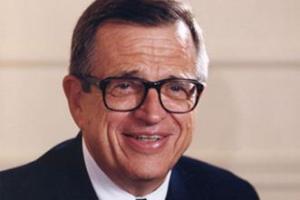
Evangelical Christianity lost one of its most eloquent and influential voices this past weekend with the death of Charles W. “Chuck” Colson. The Prison Fellowship and Colson Center for Christian Worldview founder died at 3:12 p.m. ET Saturday, April 21 at the age of 80. After a brief illness, Colson passed away at a Northern Virginia hospital with his wife, Patty, and family at his bedside.
On March 30, Colson became ill while speaking at a Colson Center for Christian Worldview conference in Lansdowne. The following morning he had surgery to remove a pool of clotted blood on the surface of his brain, and doctors determined he had suffered an intracerebral hemorrhage. Though Colson remained in intensive care, doctors and family were optimistic for a recovery as he showed some signs of improvement. However, Tuesday (April 17) Colson became gravely ill when further complications developed.

A Watergate figure who emerged from the country’s worst political scandal, a vocal Christian leader and a champion for prison ministry, Colson spent the last years of his life in the dual role of leading Prison Fellowship, the world’s largest outreach to prisoners, ex-prisoners and their families, and the Colson Center, a research and training center focused on Christian worldview teaching.

Colson has been a central figure in the evangelical Christian community since he shocked the Washington establishment in 1973 by revealing his new Christian commitment in the midst of the Watergate inquiry. In later years Colson would say that because he was known primarily as Nixon’s “Hatchet Man,” the declaration that ” ‘I’ve been born again and given my life to Jesus Christ’ kept the political cartoonists of America clothed and fed for a solid month.” It also gave new visibility to the emerging movement of “born-again” Christians.

The following statement has been issued by the Colson family:
“Patty Colson and the entire Colson family would like to thank the many people around the world who lifted up Chuck and us in prayer. We so appreciate the love and encouragement.”

This article is from Churchleaders.com

How To Measure a Pastor

How do you measure the success of a pastor? Should a pastor be measured by buildings, budgets, or backsides? Should his pedigree or accomplishments be the yardstick for his worth? How do you determine if a pastor is successful?

You can find the answer to these questions in Paul Tripp’s post “The Recipe for a Successful Pastor.” Pastors may accomplish great measurable feats; however, if they do not proceed from a heart of brokenness, love, and the pursuit of holiness then they are nothing more than worldly accomplishments.

Tripp writes:

I am convinced that many of the problems in pastoral culture result from an unbiblical definition of the essential ingredients of ministry success. Sure, most candidate profiles expect a “vibrant walk with the Lord,” but these words are often weakened by a process that asks few questions in this area and makes grand assumptions. We’re really interested in knowledge (right theology), skill (good preacher), ministry philosophy (will build the church), and experience (isn’t cutting his pastoral teeth in this new place of ministry). I have heard church leaders, in moments of pastoral crisis, say many times, “We didn’t know the man we hired.”

What does knowing the man entail? It means knowing the true condition of his heart—as far as such is possible. What does he really love, and what does he despise? What are his hopes, dreams, and fears? What are the deep desires that fuel and shape the way he does ministry? What anxieties have the potential to derail or paralyze him? How accurate is his view of himself? How open is he to confrontation, critique, and encouragement? How committed is he to his own sanctification?

How open is he about his own temptations, weaknesses, and failures? How ready is he to listen to and defer to the wisdom of others? Is pastoral ministry a community project to him? Does he have a tender, nurturing heart? Is he warm and hospitable, a shepherd and champion to those who are suffering? What character qualities would his wife and children use to describe him? Does he sit under his own preaching? Is his heart broken and his conscience regularly grieved as he looks at himself in the mirror of the Word? How robust, consistent, joyful, and vibrant is his devotional life?

Does his ministry to others flow out of the vibrancy of his devotional communion with the Lord? Does he hold himself to high standards, or does he settle for mediocrity? Is he sensitive to the experience and needs of those who minister alongside him? Does he embody the love and grace of the Redeemer? Does he overlook minor offenses? Is he ready and willing to forgive? Is he critical and judgmental? How does the public pastor differ from the private husband and dad? Does he take care of his physical self? Does he numb himself with too much social media or television? How would he fill in this blank: “If only I had ________”? How successful has he been in pastoring the congregation that is his family?

True Condition of the Pastor’s Heart

A pastor’s ministry is never just shaped by his experience, knowledge, and skill. It is also always shaped by the true condition of his heart. In fact, if his heart is not in the right place, knowledge and skill can make him dangerous.

Pastors often struggle to find living, humble, needy, celebratory, worshipful, meditative communion with Christ. It is as if Jesus has left the building. There is all kinds of ministry knowledge and skill, but it seems divorced from a living communion with a living and ever-present Christ. All this activity, knowledge, and skill seems to be fueled by something else. Ministry becomes shockingly impersonal. Then it’s about theological content, exegetical rightness, ecclesiastical commitments, and institutional advancement. It’s about preparing for the next sermon, getting the next meeting agenda straight, and filling the requisite leadership openings. It’s about budgets, strategic plans, and ministry partnerships.

None of these things is wrong in itself. Many of them are essential. But they must never be ends in themselves. They must never be the engine that propels the vehicle. They must all express something deeper in the pastor’s heart.

The pastor must be enthralled by, in awe of, and in love with his Redeemer so that everything he thinks, desires, chooses, decides, says, and does is propelled by love for Christ and the security of rest in the love of Christ. He must be regularly exposed by, humbled by, assured by, and given rest by the grace of his Redeemer. His heart needs to be tenderized day after day by his communion with Christ so that he becomes a loving, patient, forgiving, encouraging, and giving servant-leader. His meditation on Christ, his presence, his promises, and his provisions must not be overwhelmed by his meditation on how to make his ministry work.

Protection Against All Other Loves

Only love for Christ can defend the heart of the pastor against all other loves that have the potential to kidnap his ministry. Only worship of Christ has the power to protect him from all the seductive idols of ministry that will whisper in his ear. Only the glory of the risen Christ will guard him against the self-glory that tempts all and destroys the ministry of so many.

Only Christ can turn an arrogant, “bring on the world” seminary graduate into a patient, humble giver of grace. Only deep gratitude for a suffering Savior can make a man willing to suffer in ministry. Only in brokenness before your own sin can you give grace to fellow rebels among whom God has called you to minister. Only when your identity is firmly rooted in Christ will you find freedom from seeking to get your identity out of your ministry.

We must be careful how we define ministry readiness and spiritual maturity. There is a danger in thinking that the well-educated and well-trained seminary graduate is ministry ready or to mistake ministry knowledge, busyness, and skill with personal spiritual maturity. Maturity is a vertical thing that will have a wide variety of horizontal expressions. Maturity is about relationship to God that results in wise and humble living. Maturity of love for Christ expresses itself in love for other.

Thankfulness for the grace of Christ expresses itself in grace to others. Gratitude for the patience and forgiveness of Christ enables you to be patient and forgiving of others. Your daily experience of the rescue of the gospel gives you a passion for people experiencing the same rescue. This is the soil in which true ministry success grows.

The Power of the Negative

As leaders, there are times we have to make difficult decisions on how to address the mistakes, weaknesses, or shortcomings of others. After taking time to pray and think through the situation, we still find ourselves struggling with how to approach the other person in just the right way. We want them to know how important they are; however, their actions are hurting others and must be dealt with.

The Power of the Negative” is a post which Dr. Thom Rainer calls attention to our need to have a healthy balance when using negative reinforcement.

Rainer writes:

I often turn to Brad Waggoner for leadership advice and wisdom. He serves as executive vice president of LifeWay and, previously, as dean of a graduate school of leadership. He provides me a gentle reminder from time to time on, to use his words, “the power of the negative.”

Indeed I often have to remind myself of this leadership principle.

Understanding the Principle

The principle is simple but profound: Negative reinforcement has 20 times or more power than positive reinforcement.  At first glance, a leader may conclude that speaking and leading negatively is the best path since it is so powerful. To the contrary, unless used wisely, negative words and leadership can demoralize, demotivate, and destroy because of its very power.

While there is a place for negative leadership, it must be used with the greatest of care and discernment.

Examples for All of Us

We all experience the power of the negative, either as givers or recipients. See if you can identify with any of these examples:

  • You speak or preach somewhere and you get twenty compliments and one criticism. Upon which one do you dwell?
  • A husband in anger tells his wife that he is tired of her. Though he has given her over a dozen compliments that week, which one does she remember?
  • A child receives accolades for her good grades that semester. But the dad, upon discovering the child has her first failing grade, tells her “you won’t amount to anything in life at the pace you are going.” Which of the father’s words stick with the child for years if not a lifetime?
  • One coworker points out problems in another coworker’s area. Though the praises have been equal to the criticisms, which have the greatest power?
  • A CEO who has provided mostly steady leadership for a few years has an anger meltdown in front of his direct reports. What facet of his leadership is remembered the most?

A Time to Tear Down, A Time to Build Up

The writer of Ecclesiastes tells us clearly that there are times to be negative and times to be positive (3:3). Indeed there are times for a prophetic voice, a corrective voice, and an admonishing voice. The problem is that the writer of Ecclesiastes does not give us specific instruction on timing and frequency.

Many of us are tempted to exercise the power of the negative too frequently. When we are negative about some other person and event, we are able to look away from ourselves and our own weaknesses and failures. It’s easier to the point the finger of accusation at someone other than ourselves.

Further the power of the negative can be tempting because we often get attention when we do so. I can point to one example clearly on this blog. The article that has received the most views was a negative article I wrote on Jerry Sandusky and the Penn State child sex abuse scandal. I am convinced and convicted that the article was appropriate and timely. But I must ever keep in mind the power that negativity has.

The Power of the Negative and Discernment

The Apostle Paul said these words to a church 2,000 years ago, and they still apply to us today: “Therefore encourage one another and build each other up as you are already doing” (1 Thessalonians 5:11, HCSB). There are indeed times when a prophetic or negative word is in order. There are moments in any leader’s lives, whether a parent, pastor, or president, that the power of the negative should be exercised.

But it should be exercised with wisdom and discernment.

It would seem that the preponderance of our leadership should be one of building up and encouraging. Such leadership can change a family for the good. It can change an organization for the good.

And it might just change the world for good.

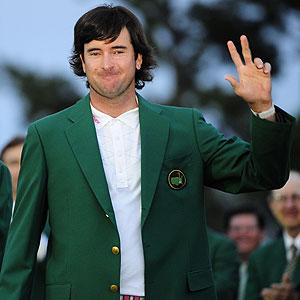
Way To Go Bubba!

In recent years we have heard a lot of athletes talking about their faith in Christ. Last week after winning the Masters golf tournament Bubba Watson gave the following interview with the Billy Graham Evangelistic Association:

Bubba Watson, first-time winner of a Masters Tournament who earned his green jacket on Easter Sunday, recently spoke about tweeting for God, the PGA Bible study he took part in and his newly adopted son.

Watson, 33, spoke with the Billy Graham Evangelistic Association after winning the 2012 Masters Tournament on Sunday. The golfer who tearfully thanked his “Lord and Saviour Jesus Christ” after the big win, said he utilises his Twitter account to spread his Christian faith.

Watson describes himself on his Twitter page as “Christian. Husband. Daddy. Pro Golfer”. The Christian golfer said he has lost at least 100 followers for tweeting biblical messages.

When Watson receives negative backlash for his biblical tweets, he responds with messages like “I will pray for u and ur family.” The golfer also quoted one of his favorite Christian rappers, Lecrae, saying he would like his followers to see God through him.

“Lecrae said it the best,” Watson told the Billy Graham Evangelistic Association. “He doesn’t want to be a celebrity. He doesn’t want to be a superstar. He just wants to be the middle man for you to see God through him.”

Watson maintained his Christian principles during the golf tournament by engaging in an hour-long Bible study with fellow golfers each week. He described the importance of being able to connect with both God and his peers.

“For me it’s a way to get back connected with the Bible and with God and Jesus. Now you know other people you can talk to, ask questions to, tell them what you’re thinking, tell them what’s going on in your life,” Watson said. “Getting more in the Word and realising that golf is just an avenue for Jesus to use me to reach as many people as I can.”

Watson, who recently adopted a one-month-old baby boy named Caleb with his former WNBA playing wife Angie Ball, also described his first church experience. According to Watson, twin girls from his neighbourhood convinced him to attend.

“The girls asked me to go to church,” Watson said. “And after a few times going I realised this is what I wanted to do. This is truth here. And I gave myself to the Lord.”

After he began dating Ball, the couple decided to live for Christ. Watson decided to get baptised with his wife in 2004 as a student at the University of Georgia.

“We wanted to be Christ followers,” Watson said. “We wanted to do the right thing. We started turning to the Lord for our decisions.”

The professional golfer, who said he has never taken a lesson, said he was grateful for the people around him and the opportunity to live his life for Christ.

“I’ve really got a good team around me trying to help me succeed,” Watson said. “Not just in golf, but off the golf course, to be a light for Jesus.”