Incredible Inheritance

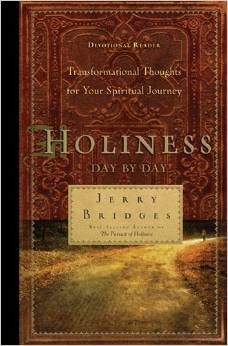
Holiness Day By Day

Years ago our pastor told about a southern plantation owner who left a $50,000 inheritance (perhaps equivalent to half a million dollars today) to a former slave who’d served him faithfully all his life. The estate’s lawyer duly notified the old man and told him the money was deposited at a local bank. 

Weeks went by, and the former slave never called for any of his inheritance. Finally, the banker called him in and told him again he had $50,000 available to draw on at any time. “Sir,” the old man replied, “do you think I can have fifty cents to buy a sack of cornmeal?” 

That story illustrates the plight of many Christians today. Paul wrote of preaching “the unsearchable riches of Christ” (Ephesians 3:8) -referring not to financial wealth but to the glorious truths of the gospel. It’s as if each of us has $50,000 available in the gospel, yet most of us are hoping we can squeeze out fifty cents’ worth. We don’t understand the riches of the gospel any more than the former slave understood his inheritance. 

Suppose also that the slave was not only poverty-stricken but also deep in debt for back rent. With his inheritance, he could not only pay off the debt but also buy his house. His inheritance far surpasses his debt. This is the truth of the gospel. We owe an enormous spiritual debt to God; there’s no way we can repay it. The gospel tells us Jesus Christ paid our debt, but it also tells us far more: We’re no longer enemies and objects of God’s wrath. We’re now His sons and daughters, heirs with Christ to all His unsearchable riches. This is the good news of the gospel.

 Source: Jerry Bridges. Holiness Day by Day: Transformational Thoughts for Your Spiritual Journey (page 7) 

Feed My Sheep

heart of a servant leaderEarly in ministry I heard a well-respected pastor say, “If you’re going to be a shepherd, you have to smell like the sheep.” Often times pastors struggle to know exactly what their sheep (church members) need. We want to obey God in leading and teaching exactly what He has commanded, but at the same time we can’t help but wonder if we’re meeting the needs of those entrusted to our care.

The good shepherd knows his sheep. He doesn’t just recognize them as a group of people who are members of the congregation; but instead, he knows them personally. He spends time with them, listens to them, strives to meet their needs. He is a shepherd who confidently walks out in front of the sheep and leads them to still waters and green pastures. He is not a sheep dog that tries to frighten the sheep into going a certain direction. He is the shepherd who calls his sheep unto himself and they follow him because they know him and his love for them.

In his article “9 Heartfelt Things Church Members Would Like to Say to their Pastors,” Dr. Thom Rainer helps clarify how we pastors can better lead, feed, and know our sheep.

Dr. Rainer writes:

I am among the most blessed men in the world. God has graciously saved me and sustained me. I have an incredible family. The place and ministry where I serve vocationally is a gift from God.

And then, as if I should be blessed even more, God has allowed me to serve and hear from church leaders across the world. In this article, I share some insights I heard from church members via social media, emails, blog comments, and personal conversations.

The following nine statements are heart matters for many church members. For the most part, these members are not the perpetual critics and the business meeting naysayers. These are men and women who truly love their pastors. But many of them do have some words from the heart they would like to share with their pastors. But many are reticent to do so, because they know their pastors often receive criticisms and inordinate demands for attention.

So, hear these heartfelt words from church members who love their pastors, from men and women who truly desire the best for them.

  1. “Let me know you really care for me.” That does not mean you call me regularly or that you visit me on demand. It is more of a disposition, or maybe words from the pulpit that demonstrate your love for the members. We can tell if you really care for us and love us.
  2. “Teach me the Bible.” I know you are inundated with requests, and the expectations for your time are often unreasonable. But please do not let those people distract you from your time in the Word. I am hungry for biblical teaching and preaching. Please spend time studying the Word so you can teach us well.
  3. “Help me deal with change.” This world and culture are changing so fast that I find myself dealing with fear and uncertainly. Help me understand the steadfastness of God in a turbulent world. And understand that my fear of change in the church is often related to my fear of change in the world. So lead me gently as you lead change in the church.
  4. “Don’t lead too far ahead.” I do want you to lead us. But don’t get so far ahead of us that we mistake you for the enemy and shoot you in the rear. I know change is necessary, but learn the pace of change that is best for our church.
  5. “Help me deal with family issues.” Some of us are in struggling marriages. Some of us are lonely whether we are single or married. Some of us have problems with our children. Some of us are dealing with aging parents. We hurt deeply when we have hurts about our families. Show us biblical truths about these issues. And show us your pastoral heart and concern for these issues.
  6. “Be transparent.” We know you are imperfect, but the critics sometimes cause you to hide your faults. For sure, we don’t want every nitty gritty personal detail about you and your family. But we do want to know that you have some of the same struggles we do. It helps us to identify with you better. It helps us to pray for you more.
  7. “Don’t get defensive when I offer constructive criticism.” I know that this one is tough. You get so many criticisms already; many of them are petty and self-serving. But there are many of us who love you and will, on rare occasions, offer some words that we think are best for you. Hear us without being defensive. Pray that God’s Spirit will help you discern when you should listen and when you should ignore.
  8. “Pray for me.” Please let me know that you love your church members so much that you pray for us regularly. Let us know that you consider prayer for the members to be one of your highest priorities.
  9. “Give me hope.” This world confuses me. This degenerating culture scares me. Show me how God has dealt with such hopeless times in the past that they may be times of hope for me today. Show me Christ’s possibilities, His hope, and His encouragement in difficult days.

Pastors, your task is not easy. Indeed, it is impossible without Christ’s strength. You have many church members who love you. They are often the silent members and, thus, the disregarded members. Hear these words from healthy church members that you might be even a better pastor to them.

What would you add, church member? What would you add, pastor or staff? How do these nine sentences resonate with you?

My blog post this coming Saturday: “Nine Heartfelt Things Pastors Would Like to Say to Their Church Members.”

Source: www.thomrainer.com

I Need Thee Jesus!

I hope this arrangement of “I Need Thee Every Hour” will not only bless you, but drive you to your knees as you prayerfully sing this beautiful melody unto our Lord, Savior, Redeemer, and God!

We need You Jesus!

8 Commitments for Bible Study Leaders

heart of a servant leaderAs teachers of the Bible we have an awesome responsibility. We cannot afford to take this calling lightly. In the following post Chuck Lawless gives us eight commitments that every teacher of the Word of God should set as a goal.

I love teaching, especially when I’m privileged to lead studies from the Word of God. To be frank, though, teaching frightens me. It frightens me because teachers will be held to a stricter judgment (James 3:1). We have great responsibility, and with that responsibility comes accountability.

I am surprised, though, how little attention churches give to securing Bible study leaders and holding them accountable. Below are eight covenant commitments I would want them to affirm as they serve in the local church:

  1. I will grow in my faith and devotion to God through consistent personal Bible study. Bible study leaders have a tendency to teach from our reserves; that is, we teach out of what we learned in the past, perhaps at a time when we more faithfully read God’s Word daily. It is wrong to assume we can take on today’s teaching task on the basis of yesterday’s power. As a teacher of God’s Word, I want my personal Bible study to be present tense and growing.
  2. I will faithfully support the work of the church by regular worship attendance and financial giving. We teach not only with our words, but also with our lives. Bible study leaders who teach their group but who do not also support the church are likely growing their own kingdom more than God’s kingdom. As a Bible study leader, I want to model good churchmanship.
  3. I will be holy, knowing that what others do not see is as important as what they do see. Teaching is a public act as we stand before others and instruct. Preparation for teaching, though, is quite personal and private. When there is unconfessed sin, we lack the power of God that should mark all teaching of the Bible. The unholy Bible study leader imparts only information, but the holy Bible study leader imparts life. I want to be holy, not only for God’s glory and my good, but also for those I teach.
  4. I will teach the Word. This commitment is a non-negotiable, but Bible study leaders do not always practically keep this commitment. Conversations, food, fellowship, and prayer (all significant elements of a small group) consume the time set apart for teaching, and attention to the Bible is lessened. The wise Bible study leader takes the steps necessary to guard that time to focus on the Word. I want to meet my responsibility to lead the group clearly and intentionally to the Scriptures.
  5. I will faithfully prepare to teach each week. Let’s be honest—sometimes it’s easy to teach when you’ve done it for a number of years. We can study a little (or not at all) and still teach something. The group members might, in fact, think our teaching is great, but we know something else: we are missing the full blessing of God because we’ve not given Him time to move us in our preparation to teach. I want to long for the blessing of God when I stand before others as a Bible study leader.
  6. I will share my faith regularly and challenge the group to do the same. We must determine whether or not we will live what we lead. If we genuinely live what we lead, we will take initiative to tell others about Jesus. We will weep over non-believers because we trust the Word we teach. To not tell others is to reveal that our teaching is only for us and for people like us. It is to be selfish with the message we communicate. I want to faithfully reach out to non-believers because I believe the message I teach is life transforming. 
  7. I will seek prayer partners and pray for group members each week. We need others praying for us because we need God’s power to make a difference through our teaching. We need someone praying for us, “Lord, do not let them lead in their own strength.” Genuine prayer is a cry for relationship, an admission of dependence, and a means by which we minister to others. I want to be a prayer warrior on behalf of the group I lead. 
  8. I will strive to raise up new Bible study leaders and multiply my class. The evidence of good teaching is not only in the classroom; it is also in the lives of our hearers. The best Bible study leaders know their responsibility is to reproduce themselves in younger leaders—who will then start new groups. They might even take some of the best group members with them. If we cannot rejoice when that happens, our teaching is likely too self-centered. I want to train new Bible study leaders and start new groups gladly.

As Bible study leaders, we will answer to God for our service. What other commitments would you include in your Bible study leader’s covenant? And, because covenants are usually two-sided, what commitments should a congregation make to Bible study leaders?

Chuck Lawless currently serves as Professor of Evangelism and Missions and Dean of Graduate Studies at Southeastern Seminary

Source: Thom Rainer

In ‘sex-crazed culture,’ Bible makes ‘no exceptions’

give a holy temple to a holy godThe following is a post by Grace Thornton, assistant editor of The Alabama Baptist, in regard to a sermon series preached by David Platt.

Thornton writes:

Be careful about shaking your head at same-sex marriage, warned David Platt, senior pastor of The Church at Brook Hills in Birmingham, Ala., and author of the best-selling book “Radical.” Christians should grieve the Supreme Court’s decision to strike down the federal ban on same-sex marriage, but believers should also be “careful not to be guilty of selective moral outrage when it comes to the issue of homosexuality,” Platt said.

Everyone, each individual, is bent toward sexual sin, Platt said.

“This is something that every sinful heart is prone to struggle with in some way or another,” said Platt, who preached in late June on the subject of the cross and sexuality. His two-part sermon series on 1 Corinthians 6 book-ended the week of the Supreme Court’s two rulings June 26 supporting gay marriage. 

“If we roll our eyes and shake our heads when we see the Supreme Court ruling on this case, yet we turn the channels on our TVs to watch the trivialization of sex on shows and advertisements, to surf the Internet to find images in order to satisfy our lusts, to go to movies that glamorize sex … and entertain sexual thoughts and desires outside of our own marriage, then we have missed the entire point,” Platt said.

Sins shouldn’t be acceptable just because they are the sins of the majority, he said. The church needs to declare war on every sexual sin that plagues Christians in order to show the world sexual purity and godly marriage.

“All throughout the Bible from cover to cover, sex is only celebrated … in the context of exclusive covenant relationship between a husband and wife. Period. There are no exceptions to that,” Platt said.

There’s no exception for homosexuality but there’s also no exception for adultery, promiscuity, pornography or masturbation, he said.

What’s happening in “our sex-crazed culture” today is essentially sex worship — the idea that “I would be happy if I had the freedom to express myself sexually,” Platt said.

“According to [secular culture], we’re not human if we can’t please our bodies however we desire, so any attempts to limit sexual expression are seen as oppressive and inhumane,” he said. “We set our minds on the things of the flesh, which is hostile to God, and we exchange God’s Word for our experience.”

So often the Bible is twisted to fit preference — as with the argument for homosexuality — or its supposed silence is interpreted as liberty, Platt said. For instance, he said, when he was a teenager he and others would ask the question, “How far is too far?”

“I never once heard a well-reasoned, objective answer based on Scripture,” he said, explaining that instead leaders would tell youth to pray, set boundaries and decide what they thought was right, because the Bible didn’t spell it out. So when he and other guys would talk about it, they would “do what teenage boys do” — set the standards as low as they could.

“I found myself in this dangerous gray area that led to guilt and failure,” Platt said, noting that even though he and his wife Heather didn’t have sex with each other or anyone else before their marriage, “that doesn’t mean we glorified God with our bodies.”

Platt urged unmarried men and women to consider that the reason God has no explicit instructions for sexual behavior between unmarried people in relationships is because God didn’t intend for them to engage in any at all.

“God in His Word has no category for two people who aren’t married but kinda sorta act like they are. It’s not mentioned one place,” he said. “That’s because they are your brother or sister in Christ and likely to be someone else’s spouse some day. If you say, ‘Well, I think I’m going to marry her,’ then marry her.

“Looking for a guideline? Don’t do anything with a brother or sister in Christ that you wouldn’t do with your brother or sister, or with someone else’s wife or husband.”

That also goes for how married people relate to people other than their spouse, he said, as well as in the case of pornography. Pornography isn’t at all relational as God intended for sexual activity to be, and in no way emulates the character of Christ.

“Men, these women are someone’s daughter — they aren’t objects, they are souls,” Platt said. “They need you to point them to Christ, not fuel their exploitation.”

Platt said he’s convinced the reason the mission field is dominated by so many single women is because pornography has such a grip on men that they are too weak to follow Christ’s call. Men need to fight the battle for the sake of unreached people worldwide and for the sake of God’s glory, he said.

“So much of the power of sin is found in its secrecy,” Platt said, urging Christians to be intentional about having accountability in place. “Guard yourself with godly friendships and Gospel accountability.”

And don’t give in to the desires of the flesh outside of marriage, even in masturbation, he said.

“God designed sex to be relational; masturbation is lustful,” Platt said. “It teaches people to satisfy themselves” and is isolating, noncommittal and self-centered. Masturbation “goes against the design of God” just as homosexuality does, he said.

“Let us give ourselves to His design and reclaim godly marriages” for the sake of Christ, families, the church and the world, he said.

Platt said he’s convinced that “living as a Christ follower is going to be harder, not easier, in the coming days” and that the Supreme Court decision will “have ramifications on religious liberty.”

But “marriage is a union that represents our union with Christ in heaven, and it will not go away,” Platt said. “It is wise to be confident in the resiliency of marriage, in the opportunity for the Gospel and in the sovereignty of our God.”

“Flee sexual sin and run to Christ,” he said.