Finish the Race

This morning I was reading Maggie Hendricks article on Lopez Lomong. Lomong is a 1,500 meter champion runner, but is trying to qualify for the 5,000 meters in the summer Olympics.

Hendricks writes:

Lopez Lomong is the U.S. champion at 1500m, but is trying out the 5000m. Since he’s still getting used to the event, he had an embarrassing moment in the race at Payton Jordan Cardinal Invitational.

With two laps to go, Lomong accelerated and broke away from the pack of runners. He easily outpaced them, and with one lap to go, slowed down to celebrate. The crowd at Stanford and track officials waved frantically for Lomong to keep going. He took off, and still easily won the race with a time of 13:11.63, plus earned the Olympic A standard qualifying time.

He was surprised by the mishap.

“When somebody said you got one more lap to go, I was like, huh?” Lomong told Race Results Weekly.

It happens, Lopez. Much better that this happens before the Olympics, right?

I think Lopez would have been humiliated if after gaining so great a lead he would lose the race because he literally quit running thinking he had finished the race.

As Christians we are called to run the race:

  • We run to win the prize (1 Corinthians 9.24)
  • We run the race unhindered (Hebrews 12.1)
  • We run the race with endurance (Hebrews 12.1)
  • We run to finish the race (2 Timothy 4.7)

We cannot allow ourselves to be so distracted that we celebrate our accomplishments before the race is finished. The race doesn’t end with salvation, it isn’t celebrated halfway through, and it isn’t finished until we have breathed our last breath. We must focus on the task at hand—running the race.

We do not just stop running whenever we feel like it. We are called by Christ to follow His example and run this race to the finish. The course that we must traverse is filled with obstacles—doubt, discouragement, difficulty, distress, discomfort, dismay, dread, despair, and even death. There will be times of loneliness and longing for the race to end; nevertheless, we must keep running. We must run in such a way as to not disqualify ourselves. We must run with the sole purpose of finishing the race.

The Christian life is not glamorous, its successes are not recognized, we are mocked, belittled, put-down, and shunned; yet still we are to press on and finish the race. Our human flesh may grow weary and want to sit on the sidelines watching as others race; however, the One who has called us has also equipped us to press on and finish the race.

As Christians we can learn a lot from John Stephen Akhwari.

While competing in the marathon in Mexico City, Akhwari fell, badly cutting his knee and dislocating the joint. He continued running, finishing last among the 57 competitors who completed the race (75 had started). The winner of the marathon, Mamo Wolde of Ethiopia, finished in 2:20:26. Akhwari finished in 3:25:27,when there were only a few thousand people left in the stadium, and the sun had set.

As he finally crossed the finish line a cheer came from the small crowd. When interviewed later and asked why he continued running, he said, “My country did not send me 10,000 miles just to start the race; they sent me to finish the race” (Wikipedia).

In heaven there is a cloud of witnesses cheering us on to finish the race. Regardless of how difficult your course or how tired you may feel, please finish the race!

Are You Peculiar?

My wife sent me this devotion from worshipfilms.com entitled “Are We Peculiar at All?”

In Titus, it says that God sent Jesus to “purify unto himself a peculiar people, zealous of good works.” The word for peculiar in the Greek literally means His own possession. What is being communicated is that we are peculiar, and we act peculiarly because God owns us, we belong to Him. So, the question for us to consider is: are we actually peculiar? As a Christian, does my life stand in significant contrast to the rest of the world? And in what ways should we be peculiar?

Let me give you 5:

 1. Our love for one another.You might say “There are people at church that I am close to and love, I would do just about anything for them.” That is awesome. But it’s not peculiar. You could go to a Jewish synagogue or a Muslim mosque or an Elks Lodge and probably find people that would say those same words.

Jesus said in Matthew 5:46, “If you love those who love you, what reward will you get? Are not even the tax collectors doing that? And if you greet only your own people, what are you doing more than others? Do not even pagans do that?”

What IS peculiar is when you can be around that person in the church that has talked bad about you behind your back, and love them the same as you do your close friend. It gets peculiar when you can love the brother that has done you wrong in a business deal that way. It’s peculiar when you genuinely love and spend time with that person that everyone thinks is really hard to be around, or the person that’s boring, or the person that smells bad.

2. Our ability to forgive. A forgiving spirit is not something that we get naturally. It does not come from our human nature. The ability to truly forgive people on a consistent basis for wrongs they have done is peculiar, and it is one evidence that God owns us, that we are His possession.

Forgiving people is not easy. It is the grace of God that enables us to do it. But we have to do it. Jesus said in Matthew 6: “For if you forgive other people when they sin against you, your heavenly Father will also forgive you. But if you do not forgive others their sins, your Father will not forgive your sins.” That’s one of those verses that we like to water down, but Jesus meant what He said. Personally, I have found that it is a lot easier to forgive people that have hurt me, than it is to forgive people that have hurt my kids or my wife. But we don’t get a free pass on any of it. We have to lean into God’s grace until we get there and fully forgive.

How do we know we have really forgiven? I heard Joy Dawson say one time that we know we have forgiven when we no longer feel the need to tell someone else about the wrong done to us.

3. The way we spend our money. You might say “I give some money to the church, and if a friend of mine is really hurting, I try to help them out when I can.” Great, but it’s not peculiar. The Jewish guy gives to his synagogue, the atheist gives to United Way. Is there are sharp contrast between the way we allocate our resources and the way our non-Christian neighbors allocate theirs?

You might be thinking, “You are focusing on an external thing. Stuff like that has to come as a fruit of our internal relationship with God.” And that is absolutely true. But it is also true that we have a tendency to ignore the whispers of the Holy Spirit when it involves things that cost us something. The Holy Spirit is not going to force His way. You can resist and He will leave you alone. A lot of times we use logic and our own reasoning to talk ourselves out of being obedient to God. And when we do that, we miss out on the chance to be peculiar, to act in a way that demonstrates God’s ownership over our lives.

4. The way we use our time. Think through your calendar for a typical week. Then take a best guess at what one of your non-Christian neighbor’s calendars looks like. If the main difference is that we go to church while they go to the Moose lodge, and we go to life group while they go to book club, and we play church league ball while they play city league, and everything else is pretty much the same, that is not peculiar.

There should be a major lifestyle difference between us because our lives are focused on those things that God says are important to Him. Of course, we have to provide for our families. Of course, we have to invest time in our children and each other. But let me say this clearly: if we have been a Christian for years, and our lifestyle is completely focused on our family unit and getting our needs and wants met, something is wrong – that is not New Testament Christianity.

Donald Miller said, “The most difficult lie I have ever contended with is this: life is a story about me.” We should be living a lifestyle that spends a substantial amount of time reaching out to others. Maybe that takes the form of taking time to have coffee or lunch with a friend who doesn’t know Jesus. Maybe it takes the form of investing time and energy to raise money so that someone you have never met can have a place to live. Maybe it means investing time in kids that don’t have a dad or mom in their life. God may call you in any number of things. But the bottom line is that our calendars should look peculiar, they should be in sharp contrast to those of unbelievers. It’s like the old saying “If you were on trial for being a Christian, would there be enough evidence to convict you?”

5. The way we handle adversity. These are tough times for most people. And I believe that it is God’s desire that we be a source of strength, steadiness, and encouragement to our non-Christian neighbors. If we can lean into God ourselves, and draw on the strength and peace He gives us, then we will be peculiar in a time when people are overwhelmed and lost.

Let’s live our lives in such a way that without any words, everyone around us knows that we are God’s peculiar possession, that He owns us.

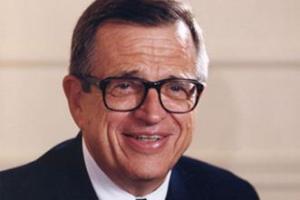
Chuck Colson Remembered

Evangelical Christianity lost one of its most eloquent and influential voices this past weekend with the death of Charles W. “Chuck” Colson. The Prison Fellowship and Colson Center for Christian Worldview founder died at 3:12 p.m. ET Saturday, April 21 at the age of 80. After a brief illness, Colson passed away at a Northern Virginia hospital with his wife, Patty, and family at his bedside.
On March 30, Colson became ill while speaking at a Colson Center for Christian Worldview conference in Lansdowne. The following morning he had surgery to remove a pool of clotted blood on the surface of his brain, and doctors determined he had suffered an intracerebral hemorrhage. Though Colson remained in intensive care, doctors and family were optimistic for a recovery as he showed some signs of improvement. However, Tuesday (April 17) Colson became gravely ill when further complications developed.

A Watergate figure who emerged from the country’s worst political scandal, a vocal Christian leader and a champion for prison ministry, Colson spent the last years of his life in the dual role of leading Prison Fellowship, the world’s largest outreach to prisoners, ex-prisoners and their families, and the Colson Center, a research and training center focused on Christian worldview teaching.

Colson has been a central figure in the evangelical Christian community since he shocked the Washington establishment in 1973 by revealing his new Christian commitment in the midst of the Watergate inquiry. In later years Colson would say that because he was known primarily as Nixon’s “Hatchet Man,” the declaration that ” ‘I’ve been born again and given my life to Jesus Christ’ kept the political cartoonists of America clothed and fed for a solid month.” It also gave new visibility to the emerging movement of “born-again” Christians.

The following statement has been issued by the Colson family:
“Patty Colson and the entire Colson family would like to thank the many people around the world who lifted up Chuck and us in prayer. We so appreciate the love and encouragement.”

This article is from Churchleaders.com

The Highway of Holiness

The wilderness and the desert will be glad, And the Arabah will rejoice and blossom; Like the crocus It will blossom profusely And rejoice with rejoicing and shout of joy. The glory of Lebanon will be given to it, The majesty of Carmel and Sharon. They will see the glory of the LORD, The majesty of our God. Encourage the exhausted, and strengthen the feeble. Say to those with anxious heart, “Take courage, fear not. Behold, your God will come with vengeance; The recompense of God will come, But He will save you.” Then the eyes of the blind will be opened And the ears of the deaf will be unstopped. Then the lame will leap like a deer, And the tongue of the mute will shout for joy. For waters will break forth in the wilderness And streams in the Arabah. The scorched land will become a pool And the thirsty ground springs of water; In the haunt of jackals, its resting place, Grass becomes reeds and rushes. A highway will be there, a roadway, And it will be called the Highway of Holiness. The unclean will not travel on it, But it will be for him who walks that way, And fools will not wander on it. No lion will be there, Nor will any vicious beast go up on it; These will not be found there. But the redeemed will walk there, And the ransomed of the LORD will return And come with joyful shouting to Zion, With everlasting joy upon their heads. They will find gladness and joy, And sorrow and sighing will flee away. (Isaiah 35.1-10 NASB)