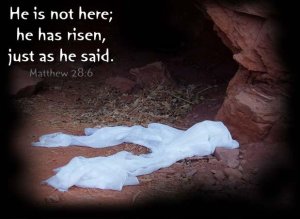
The Neglected Resurrection

Easter is a time when we celebrate the suffering, death, and resurrection of Jesus Christ. It is easy for us to focus on Christ’s suffering and death upon the cross; however, without the resurrection we have no hope for the forgiveness of sin or eternal life with God. Matthew Barrett shares with us what is gained through Christ’s resurrection in his article “The Neglected Resurrection.”

Barrett writes:

Too often in our churches the resurrection of Christ is a doctrine of secondary importance. It is neglected and forgotten until Easter comes around each year. The same disregard for the resurrection is seen in how we share the gospel. Christians tend to share the gospel as if Jesus died on the cross and that is the end of the story. We make a zip line from the crucifixion to “repent and believe,” contrary to the example Peter sets for us in Acts 2:22-24 and 4:26. The cross is central to our salvation, but what God accomplished there is incomplete unless the tomb is empty on Sunday morning. Therefore, the resurrection of Christ is vital “for us and our salvation” (to borrow from the Nicene Creed). But how exactly?

Our Regeneration Is Grounded in the Resurrection of Christ

Have you ever read the resurrection narratives and said, “Praise God! Because Christ has risen I am born again!” I know I haven’t. But if we truly understand the implications of Christ’s resurrection for our salvation, the new birth would be the first place to turn. Scripture teaches that our new birth—God’s supernatural, monergistic act whereby the Spirit makes us a new creature in Christ, replacing our heart of stone with a heart of flesh—is only possible because Jesus is risen.

Consider two passages. According to Peter, God has “caused us to be born again to a living hope through the resurrection of Jesus Christ from the dead” (1 Pet 1:3). The same God who raised Christ from the grave has also raised us from spiritual death to spiritual life. And the apostle Paul says that while we were dead in our trespasses and sins, God, being rich in mercy, “made us alive together with Christ” and “raised us up with him and seated us with him in the heavenly places in Christ Jesus” (Eph 2:5-6; cf. Col 3:1).

Because God has raised Christ from the dead, he can make us alive together with Christ by the power of the Holy Spirit. Christ’s resurrection life is the very basis and means by which we are born again.

Our Justification Is Grounded in the Resurrection of Christ

Those who believe in the God who raised Christ from the dead are counted righteous. As Paul says in Romans 4:23-25, like Abraham we are counted righteous, for we believe in him “who raised from the dead Jesus our Lord, who was delivered up for our trespasses and raised for our justification.” By raising Jesus from the dead, God approved the work of Christ on the cross for our sins. God declared his Son’s work complete! The penalty for our sin has been paid, and no guilt remains. As Wayne Grudem explains:

When the Father in essence said to Christ, “All the penalty for sins has been paid and I find you not guilty but righteous in my sight,” he was thereby making the declaration that would also apply to us once we trusted in Christ for salvation. In this way Christ’s resurrection also gave final proof that he had earned our justification (Systematic Theology).

Jonathan Edwards also states the matter precisely:

For if Christ were not risen, it would be evidence that God was not yet satisfied for [our] sins. Now the resurrection is God declaring his satisfaction; he thereby declared that it was enough; Christ was thereby released from his work; Christ, as he was Mediator, is thereby justified (Miscellanies, Vol. 13, 227).

In other words, if God did not raise Christ from the dead, he would essentially be saying, “I am not satisfied with your atoning work on behalf of sinners.” If this were the case, we would still be dead in our sins, as Paul says in 1 Corinthians 15:17. And if we are still dead in our sins then we stand guilty before a holy God, unjustified and condemned. It is hard to improve upon the words of Martyn Lloyd-Jones:

If it is not a fact that Christ literally rose from the grave, then you are still guilty before God. Your punishment has not been borne, yours sins have not been dealt with, you are yet in your sins. It matters that much: without the Resurrection you have no standing at all (The Assurance of Our Salvation, 492).

Our Sanctification Is Grounded in the Resurrection of Christ

In Romans 6, Paul explains that we can “walk in newness of life” because Christ was raised from the dead. We are not to continue in sin, for how, as Paul asked, “can we who died to sin still live in it?” We have been baptized into the death of Christ so that “just as Christ was raised from the dead by the glory of the Father, we too might walk in newness of life” (Rom 6:3-4). But Paul is not finished. He has much more to say about the resurrection and our sanctification.

For if we have been united with him in a death like his, we shall certainly be united with him in a resurrection like his. We know that our old self was crucified with him in order that the body of sin might be brought to nothing, so that we would no longer be enslaved to sin. For one who has died has been set free from sin. Now if we have died with Christ, we believe that we will also live with him. We know that Christ, being raised from the dead, will never die again; death no longer has dominion over him. For the death he died he died to sin, once for all, but the life he lives he lives to God. So you also must consider yourselves dead to sin and alive to God in Christ Jesus (Rom 6:5-12).

Paul’s last two sentences are especially powerful. As Christians, we are united to Christ. Christ died to sin, and so also must we consider ourselves dead to sin. But Christ also came back to life. The life he lives he lives to God. Therefore, as those who are in Christ, we are alive to God. No longer are we to walk according to the flesh, but according to the Spirit. Our old, unbelieving, sinful, condemned self has been crucified with Christ. And now that we are new creatures, we are no longer enslaved to sin, but by the power of the Spirit are able to walk in this newness of life.

None of this, however, is possible if Christ remains in the tomb. His resurrection is our victory over the reign of sin. Only because he has risen do we have the assurance, the confidence, and the ability to now walk in godliness. In this light, therefore, Paul’s admonition is all the more convicting:

If then you have been raised with Christ, seek the things that are above, where Christ is, seated at the right hand of God. Set your minds on things that are above, not on things that are on earth. For you have died, and your life is hidden with Christ in God. When Christ who is your life appears, then you also will appear with him in glory (Col 3:1-4).

The Climax of Redemptive History

Richard Gaffin once wrote that not only is the resurrection of Christ the pivotal factor in Paul’s soteriology, the “climax of the redemptive history of Christ,” but it is also that “from which the individual believer’s experience of redemption derives in its specific and distinguishing character and in all aspects of its inexhaustible fullness” (Resurrection and Redemption, 135). 

I couldn’t agree more. If we miss the importance of Christ’s resurrection for our salvation, then we have, as Sinclair Ferguson observes, misunderstood the gospel, severing our salvation from the lordship of Christ (Resurrection and Redemption, 6). How unthinkable this must be for the Christian who, as Calvin explains, believes that “our whole salvation and all its parts are comprehended in Christ” (Institutes II.16.19).

Real Bad

In a recent post, Timothy Keller discussed Jesus’ attitude toward all the difficulties, pain, and suffering we face.

Keller writes:

The story of Jesus standing before the tomb of Lazarus is an endless source of insight for me. As he was about to raise Lazarus from the dead, Jesus was not smiling. He was angry. He was weeping. Why? Because death is a bad thing! Jesus wasn’t thinking, ‘They think that this is a tragedy, but no harm done! I’m about to raise him from the dead. This looks like a bad thing, but it’s not. It’s really a good thing! It’s a way for me to show my glory. It’s really exciting! I can’t wait!’ He wasn’t thinking that. Jesus was weeping at the tomb, because the bad thing he’s about to work for good is bad. The story of Lazarus does not give you a saccharine view of suffering, saying bad things are really blessings in disguise or that every cloud has a silver lining. The Bible never says anything like that! God will give bad things good effects in your life, but they’re still bad. Jesus Christ’s anger at the tomb of Lazarus proves that he hates death. He also hates loneliness, alienation, pain, and suffering. Jesus hates it all so much that he was willing to come into this world and experience it all himself, so that eventually he could destroy it without destroying us.

There’s no saccharine view in the Christian faith. The promise is not that if you love God, good things will happen in your life. The promise is not that if you love God, the bad things really aren’t bad; they’re really good things. The promise is that God will take the bad things, and he’ll work them for good in the totality.”

Many people have questioned God’s love for them after they have placed their faith in Christ. They don’t understand why they still suffer even though they are a Christian. Like the seed sown in the shallow soil they wither under the heat of discomfort and eventually turn away from God completely.

Jesus never promised us a life without trouble, in fact He actually told us in this life we would have troubles (John 16.33). Jesus didn’t come to give us our hearts desire. He came to deliver us from God’s wrath. He came to give us life eternal in heaven. He came because of His great love for us.

Tomorrow we will continue our study of Jesus’ “I Am” statements in the book of John. As we look at the broader story around Jesus’ declaration, “I am the resurrection and the life” (John 11.25) we will discover some of the similarities of Lazarus being raised from the dead physically and our being raised spiritually.

I hope to see you Resurrection Sunday at 10:45 a.m. as we celebrate Jesus’ victory over sin, death, hell, and the grave.

Here is a link for directions to Living Oaks Baptist Church.

The Freedom of Forgiveness

As Christians, we should find great peace in the fact “…there is now no condemnation for those who are in Christ Jesus” (Romans 8.1 NASB), or as J.B. Phillips put it in his inspiring version of the New Testament, “No condemnation now hangs over the head of those who are ‘in’ Jesus Christ. For the new spiritual principle of life ‘in’ Christ lifts me out of the old vicious circle of sin and death.” God has taken our sin and cast it as far as the East is from the West (Ps 103.12). Knowing God has removed all of our shame, guilt, and blame gives us restful peace.

This peace, purchased by Christ, comes with an added blessing–forgiving others as we have been forgiven. The Apostle Paul put it this way, “So, as those who have been chosen of God, holy and beloved, put on a heart of compassion, kindness, humility, gentleness and patience; 13 bearing with one another, and forgiving each other, whoever has a complaint against anyone; just as the Lord forgave you, so also should you” (Col. 3.12-13, NASB). We are commanded to forgive as Christ has forgiven us.

Jesus didn’t wait for our apology, repentance, grief, or for us to start living a godly life before He made a way for our forgiveness. He gave His life for us while we were still dead in our trespasses and sin. He showed grace, mercy, compassion, and love long before we ever repented of our rebellious nature or sought His forgiveness. That is the way we are to act toward those who hurt, betray, or wrong us.

While summarizing a sermon by Jonathan Edwards, Tony Reinke shares some of the reasons we hold on to grudges in his post “On Grudges and Generosity.” This isn’t a comprehensive list; however, it should give us a clear picture why we hold on to our hurts instead of modeling Christ’s example of forgiveness toward others.

Reinke writes:

Envy. Envy is withholding blessings from others in order to preserve my own joy-stature. It is “a spirit of opposition against another’s comparative happiness.” We like to be distinguished. We like to be superior to others. We want to stand out. We seek happiness and that often means we want to be happier than others, and so we begrudge others, lest they match or exceed us in happiness. Or we can twist our envy in the other direction. Others have more happiness than me already, so what need is there for me to share? Either way, envy cuts off our generosity.

Contempt. Contempt is more personal, a withholding of blessings from others because they are too lowly, or too unworthy of the blessings I have to offer them. It is revolt at the thought of my blessing resting in their unworthy hands. Of course, we would never say it that way. This subtle contempt, this looking down on others, cuts off all hopes of generosity.

Resentment. Resentment is withholding blessings from others because they have wronged me or, merely by some known offense or guilt, are unworthy of my generosity. Once we have been wronged, we may not look for opportunities to return wrongs, but we often stop looking for opportunities to bless. Thus resentment is effective at cutting off generosity.

We are “naturally selfish and pernicious in our benevolence,” writes Edwards. We are quick to begrudge.

We could beat up on ourselves all day long. We are envious, contemptuous, sinners quick to resent, and we find it hard to let go. But Edwards is not interested in beating us up. He’s interested in gospel theology, and in turning our attention to the God who holds no envy, contempt, or resentment against his children. And to that end, he lets our eyes adjust to the darkness before turning our heads to the glory.

God has every right to hold our sin against us. We deserve for Him to give us the cold shoulder, to talk bad about us to others, to hold a grudge for our rebellion; nevertheless, He shows grace, forgiveness, and mercy. In the midst of all we deserve, He cries out, “Therefore there is now no condemnation for those who are in Christ Jesus” (Rm 8.1, NASB).

If God, Who is perfect, forgives and forgets our sin shouldn’t we do the same to those who wrong us? Take it from me, there is great joy in obeying the indwelling Spirit’s leading to forgive others regardless of whether they are repentant or not. The joy comes from being transformed into the image of Christ!

No Shame, Guilt, or Blame

In his post “More, Not Less,” Tullian Tchividjian shares how we are no longer under condemnation. As Christians, we are free to enjoy complete forgiveness and eradication of all our past, present, and future sin. We stand before God JUSTIFIED!

Tullian Tchividjian writes:

“There is therefore now no condemnation for those who are in Christ Jesus.” (Romans 8:1)

However deep and wide you think the freedom offered to sinners in the gospel is–it’s more, not less. As my friend Dane Ortlund says, “It’s time to blow aside the hazy cloud of condemnation that hangs over us throughout the day with the strong wind of gospel grace.”

Robert Capon expounds on this:

Saint Paul has not said to you, “Think how it would be if there were no condemnation”; he has said, “There is therefore now none.” He has made an unconditional statement, not a conditional one–a flat assertion, not a parabolic one. He has not said, “God has done this and that and the other thing; and if by dint of imagination you can manage to pull it all together, you may be able to experience a little solace in the prison of your days.” No. He has simply said, “You are free. Your services are no longer required. The salt mine has been closed. You have fallen under the ultimate statute of limitation. You are out from under everything: Shame, Guilt, Blame. It all rolls off your back like rain off a tombstone.”

It is essential that you see this clearly. The Apostle is saying that you and I have been sprung. Right now; not next week or at the end of the world. And unconditionally, with no probation officer to report to. But that means that we have finally come face to face with the one question we have scrupulously ducked every time it got within a mile of us: You are free. What do you plan to do? One of the problems with any authentic pronouncement of the gospel is that it introduces us to freedom.

So, what are you going to do now that you don’t have to do anything? The secret of worship is that it’s only when you deeply grapple with the pride-smashing fact that you can’t do anything for Jesus, you begin wanting to do everything for Jesus. True discipleship happens when you come to terms with the fact that you are so unconditionally loved, forgiven, pardoned, and free that you say “yes” to whatever God wants.

Does God Send People to Hell?

I cannot even begin to count the number of people over the years who have asked me, “What happens to people who never get to hear the gospel before they die?” They ask because they are genuinely concerned and wonder what will happen to the eternal souls of those who are never reached with the good news of Jesus Christ.

Justin Taylor deals with this subject in his study on Romans 1.18-21 entitled “What Unbelieving Pagans Know about God and Why They Are Responsible for It.” He makes it perfectly clear that each and every person is responsible for what they do with God. His study also shows us the importance of being ready to share Jesus with everyone we come into contact with.

Mr. Taylor writes:

I am continually amazed at how much dense theology Paul is able to pack into a few lines of a letter. Consider, for example, just four verses: Romans 1:18-21.

For the wrath of God is revealed from heaven against all ungodliness and unrighteousness of men, who by their unrighteousness suppress the truth. 19 For what can be known about God is plain to them, because God has shown it to them. 20 For his invisible attributes, namely, his eternal power and divine nature, have been clearly perceived, ever since the creation of the world, in the things that have been made. So they are without excuse. 21 For although they knew God, they did not honor him as God or give thanks to him, but they became futile in their thinking, and their foolish hearts were darkened.

Paul has just finished exulting in the “good news” of the gospel (Rom. 1:15-17), but he now begins to paint a contrasting backdrop of the “bad news” for those who rebel against their holy creator. Whereas “the righteousness of God is revealed from faith for faith” to all who believe (vv. 16-17), “the wrath of God is revealed from heaven” against all who suppress God’s truth (v. 18). Paul piles up the terms in reference to the godless Gentiles: on the one hand, “ungodliness and unrighteousness” describes what they do, and on the other hand “by their unrighteousness” is the way in which they go about their work of suppressing truth. The reality of the redundancy is repulsive: by their unrighteousness they perform unrighteousness.

Paul immediately grounds this programmatic statement with the important insight that “what can be known about God is plain to them” (v. 19). Paul is not saying that these unbelievers, apparently without access to special revelation, know everything there is to know about God, but rather that they know everything that has been commonly or generally revealed to all. That is, they know “what can be known.” How does Paul himself know this? How can he claim with certainty what every man knows about God? Has he interviewed them all? In line with his God-centered theology, Paul grounds his own certainty about this universal knowledge in God’s act of common revelation: “God has shown it to them” (v. 19b).

Paul now proceeds to explain  in verse 20 how this can be. Note four things.

First, the object of their knowledge is God’s “invisible attributes.” In particular, Paul points to God as Creator with eternality, power, and divinity (“eternal power and divine nature . . . creation of the world”).

Second, he explains the location of their knowledge of these invisible divine attributes: “in the things that have been made.” In other words, his invisible characteristics are found in his visible creation.

Third, he explains the duration of their knowledge, to the effect that this has always been the case: “ever since the creation of the world.”

Fourth, he points to the quality of their knowledge: it is “clearly perceived,” hearkening back to his comment that this knowledge is “plain to them.”

Paul adds all of this together and draws the inescapable conclusion (oun, so, therefore) for those who know God but suppress his truth: “they are without excuse.” None can plead ignorance, therefore none can excuse their moral responsibility and culpability.

Paul continues to explain what he means in verse 21. Their knowledge of God should lead to two appropriate responses, but instead we see two regrettable reversals: (1) they refused to honor God as God and (2) they refused to thank God for his wonderful gifts.

This then yields the two commensurate results: (1) they became futile in their thinking and (2) their foolish hearts were darkened.

In the remainder of this first chapter Paul unfolds the consequences for this knowledge-suppressing behavior, showing the further descent into the darkness of idolatry in light of God’s inaugurated eschatology of judgment.

Studying just these few verses gives us enormous insight into what the pagans know and why they are responsible. May it motivate us to bring the gospel to those who are both near and far.