A Beautiful Aroma of Praise

Graceway MediaIn Luke 7.36-50 we read the story of a Pharisee opening his home to entertain Jesus for dinner. When a certain sinful woman in the town learns that Jesus is in the house, she approaches Him with an alabaster box. She opens the box and anoints Jesus’ feet with the costly perfume. You can easily imagine the aroma of her worship filling the entire home. She was  forgiven by Jesus and wanted to express her undying love and gratitude for the grace He had shown her.

Tomorrow as we gather together in churches all around the globe, I pray the beautiful aroma of worship which rises from our hearts will fill all of Heaven. I pray our ascending love and gratitude for His grace and forgiveness is well pleasing to God—”the King eternal, immortal, invisible, the only God…” and that to Him “…be honor and glory forever and ever. Amen” (1 Timothy 1.17).

“Alabaster Box” by Cece Winans has been one of my favorite worship songs for many years. I hope it adds to your Lord’s Day of Worship.

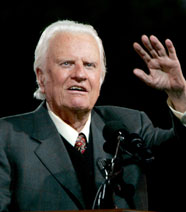
“A Fresh Vision for America” by Billy Graham

From the Desk of Billy Graham:

All of us care a great deal about our country. The intensity of opinions and feelings during the long political campaign showed the depth of that concern.

Now with the votes counted, it is important to remember that whether we are personally pleased with the outcome or not, God wants us to pray for those chosen to be our leaders—at the national, state, and local levels. The Bible urges us to do so with both respect and thanksgiving (see 1 Peter 2:17; 1 Timothy 2:1–3).

We must also remember that no election will ever solve America’s most basic problems. That is because the trouble, at its root, is in the human heart, and the only path to true restoration—for a person or for a nation—is through repentance. The Bible says, “Repent therefore, and turn back, that your sins may be blotted out, that times of refreshing may come from the presence of the Lord” (Acts 3:19–20, ESV).

Only the Gospel, God’s Good News, has the power to change lives, heal hearts, and restore a nation.

I want that to happen in America, and I know you want that as well. I turned 94 on the day after the election. Although my age and health have limited me physically in recent years, I plan to spend the next 12 months, if God permits, doing all that I am able to do in helping to carry out a fresh vision God has given us—a vision to bring the Gospel of Jesus Christ to every possible place in America by the time of my 95th birthday. It’s called My Hope, and I pray that you will partner with us.

In the days of the Prophet Jeremiah, God commanded His people to “seek the peace and prosperity” of the land where He had placed them and to “pray to the Lord for it” (Jeremiah 29:7, NIV). I ask you to join me in committing the next 52 weeks to faithful, even fervent, prayer for this land in which we live. You can start by making a list of people you know personally who need Jesus Christ and then begin praying regularly for them, individually by name.

Pray also for your neighborhood and your city, asking God to bring men, women, teens, and children—people from your own community—to Himself during the next 12 months. And pray along with me for the nation, asking God for mercy on America and for a great spiritual awakening.

My son Franklin is spearheading this vision and outreach, working in partnership with thousands of churches across every state in the country (ask your pastor if your church plans to take part). Franklin will be sending you more details on how this will work through the coming months and how you can participate.

At the climax of My Hope one year from now, if God enables me, I want to call the entire nation to repentance and lasting hope in Jesus Christ. The message I give will be presented in a fresh format, different from preaching at a Crusade, but the same Gospel. I believe we will see God work in a mighty way.

It is my passionate, heartfelt desire to see God change hearts and lives in every community in America, and I pray He will stir the same desire in you.

Will you join Franklin and me in this bold venture?

May God bless you,

Billy Graham              

 Source: Billy Graham Evangelistic Association

Losing My Religion

As I go about my day, I often ask people what they believe it takes for someone to get to heaven. Over the years I have received a multiplicity of answers—be a good person, help the poor, don’t break God’s rules, or just go to church. All these answers rely on human works to obtain right standing before God. The truth is none of these will ever move us one inch closer to heaven.

Sometimes human works and the gospel look an awful lot alike; however, the difference between the two are worlds apart. In a recent post J.D. Greear clearly explains what the gospel can do that human works (religion) cannot.

Greear writes:

Chapter 9 of Hebrews is all about dealing with guilt. The author explains that the entire Old Testament system was set up to deal with guilt, though it was powerless to do the only thing we needed it to do: purify our consciences. Religious rituals only cover sin, they cannot change the heart. Christ, to whom all the Old Testament points, is able to transform us in 3 ways that the old Temple, and, in fact, no religion, can:

1. From guilt to purity.

Hebrews 9:14 says that the blood of Christ “purifies our conscience.” The tabernacle sacrifices only ever served to cover guilt, but they could never remove it. The blood of Christ takes the penalty of guilt away forever, because through his death Jesus absorbed the penalty of sin—death—into himself. As Charles Spurgeon has said, God would be unjust to punish us for our sins, because then He would be requiring two payments for the same sin.

The forgiveness now available to us because of Christ’s death is more than a mere waiving of penalty, however. Our guilt has not only been removed, but has been replaced with purity, with love, with acceptance from the very God of the universe. In response to our sin, forgiveness says, “You may go.” The gospel tells us, “You are cherished; you may come.”

2. From dead works to loving service.

Again, in Hebrews 9:14, the author tells us that the blood of Christ purifies us “from dead works to serve the living God.” Religion is filled with all kinds of works, various attempts to get God to approve of us. These works are dead, because they are not love for God, but love for self. We perform for God not because we love Him but because we want something from him. If I were to take my friend out to dinner because I know he has a beach house, it’s not done out of love. I am making an investment: sixty bucks for a nice meal and I can score a week at the Outer Banks!

When you strive to do good works to gain acceptance, your works are dead. This is the difference between religion and the gospel. In religion you do good works to be accepted by God; in the gospel you do good works because you are accepted by God.

As John Newton, the author of Amazing Grace, wrote in another of his hymns:

Our pleasure and our duty, though opposite before, Since we have seen His beauty, are joined apart no more. To see the Law by Christ fulfilled, to hear His pardoning voice, Transforms a Slave into a Child, and Duty into Choice.

Religious ritual cannot take away sin. The Jewish people made a tragic mistake. They took the symbols of sacrifice and started to treat them like they were the real thing, like adherence to religious ritual could actually take away sin. People do that today when they think that certain religious rituals (like taking communion, regular church attendance, tithing, or saying a ‘Hail Mary’) can take away their sin. At their very best they can merely covering sin, like spraying yourself with perfume instead of taking a bath. That may work a few times, but soon enough the stench permeates the perfume. The blood of Jesus does not cover our sin with some kind of religious cologne, it removes our sin and transforms our hearts. Apart from faith in Christ, religious rituals are dead works. Alive with faith, religious activity becomes loving service.

3. From dread of God to longing for Him.

As we see in Hebrews 9:28, the gospel replaces the sense of dread we used to have before God with a deep sense of longing. When we fear judgment, the thought of being in God’s presence is dreadful. The sacrifice of Jesus, however, assures us that judgment is gone, and in its place are God’s love and acceptance. When we realize this, God’s presence becomes something we desperately crave.

I see this with my kids. When I come home from a trip, my four children will rush out to meet me at my car. My four-year-old daughter will immediately start to give me the details of everything that happened while I was away. It doesn’t make much sense, since she’s four, but she knows I’ll listen eagerly. They know that I long to be near them, so they long to be near me. When they think I am angry, however, or in a bad mood, they stay away. Many people are like that with God. They dread being around Him because they fear displeasure or judgment.

The gospel gives us the confidence of a beloved child before God. Rather than fearing His judgment, we sense only approval and tenderness. We cry “Abba, Father,” and we begin to long for Him.


What Does True Repentance Look Like?

It is not always easy to tell the difference between godly sorrow or worldly sorrow. Godly sorrow seeks a healthy relationship with God, others, and yourself. Godly sorrow leads us to do our part in admitting our sin as well as repairing damaged relationships.

Worldly sorrow just wants the trouble to go away. Just say whatever is necessary to fix the problem, and then you can get back to whatever you want. Worldly sorrow only looks out for it’s best interest. Those displaying worldly sorrow are never sorry enough to change.

Jared C. Wilson gives us a few more indicators of what true repentance looks like in his post “How Do You Know When Someone Is Repentant?: 12 Signs.”

Wilson writes:

How do you know when someone is repentant? In his helpful little book Church Discipline, Jonathan Leeman offers some guidance:

A few verses before Jesus’ instruction in Matthew 18 about church discipline, he provides us with help for determining whether an individual is characteristically repentant: would the person be willing to cut off a hand or tear out an eye rather than repeat the sin (Matt. 18:8-9)? That is to say, is he or she willing to do whatever it takes to fight against the sin? Repenting people, typically, are zealous about casting off their sin. That’s what God’s Spirit does inside of them. When this happens, one can expect to see a willingness to accept outside counsel. A willingness to inconvenience their schedules. A willingness to confess embarrassing things. A willingness to make financial sacrifices or lose friends or end relationships. (p. 72)

These are good indicators, and I believe we can add a few more.

Here are 12 signs we have a genuinely repentant heart:

1. We name our sin as sin and do not spin it or excuse it, and further, we demonstrate “godly sorrow,” which is to say, a grief chiefly about the sin itself, not just a grief about being caught or having to deal with the consequences of sin.

2. We actually confessed before we were caught or the circumstantial consequences of our sin caught up with us.

3. If found out, we confess immediately or very soon after and “come clean,” rather than having to have the full truth pulled from us. Real repentance is typically accompanied by transparency.

4. We have a willingness and eagerness to make amends. We will do whatever it takes to make things right and to demonstrate we have changed.

5. We are patient with those we’ve hurt or victimized, spending as much time as is required listening to them without jumping to defend ourselves.

6. We are patient with those we’ve hurt or victimized as they process their hurt, and we don’t pressure them or “guilt” them into forgiving us.

7. We are willing to confess our sin even in the face of serious consequences (including undergoing church discipline, having to go to jail, or having a spouse leave us).

8. We may grieve the consequences of our sin but we do not bristle under them or resent them. We understand that sometimes our sin causes great damage to others that is not healed in the short term (or perhaps ever).

9. If our sin involves addiction or a pattern of behavior, we do not neglect to seek help with a counselor, a solid twelve-step program, or even a rehabilitation center.

10. We don’t resent accountability, pastoral rebuke, or church discipline.

11. We seek our comfort in the grace of God in Jesus Christ, not simply in being free of the consequences of our sin.

12.We are humble and teachable.

As it is, I rejoice, not because you were grieved, but because you were grieved into repenting. For you felt a godly grief, so that you suffered no loss through us. For godly grief produces a repentance that leads to salvation without regret, whereas worldly grief produces death. For see what earnestness this godly grief has produced in you, but also what eagerness to clear yourselves, what indignation, what fear, what longing, what zeal, what punishment! At every point you have proved yourselves innocent in the matter.

2 Corinthians 7:9-11

The Rescue!

Throughout Easter weekend I read several posts that greatly blessed my heart. “How the Resurrection Undoes Our Need to Be Proven Right” by Russell Moore was one of my favorites.

Dr. Moore writes:

As Jesus drowned in his own blood, the spectators yelled words quite similar to those of Satan in the wilderness: “Let the Christ, the King of Israel, come down now from the cross that we may see and believe” (Mk. 15:32).

But Jesus didn’t jump down. He didn’t ascend to the skies. He just writhed there.

The bloated corpse of Jesus hit the ground as he was pulled off that stake, spattering warm blood and water on the faces of the crowd.

That night, the religious leaders probably read Deuteronomy 21 to their families, warning them about the curse of God on those who are “hanged on a tree.” Fathers probably told their sons, “Watch out that you don’t ever wind up like him.”

Those Roman soldiers probably went home and washed the blood of Jesus from under their fingernails and played with their children in front of the fire before dozing off. This was just one more insurrectionist they had pulled off a cross, one in a line of them dotting the roadside. And this one (what was his name? Joshua?) was just decaying meat now, no threat to the Empire at all.

The corpse of Jesus just lay there in the silence of that cave. By all appearances it had been tested and tried, and found wanting.

If you had been there to pull open his bruised eyelids, matted there together with mottled blood, you would have looked into blank holes. If you had lifted his arm, you would have felt no resistance. You would have heard only the thud as it hit the table when you let it go. You might have walked away from that morbid scene muttering to yourself, “The wages of sin is death.”

But sometime before dawn on Sunday morning, a spike-torn hand twitched. A blood-crusted eyelid opened. The breath of God came blowing down into that cave, and a new creation flashed into reality.

God was not simply delivering Jesus (and with him all of us) from death. He was also vindicating him (and with him all of us). By resurrecting Jesus from the dead, God was affirming what he had said over the Jordan waters. He was declaring Jesus “to be the Son of God in power” (Rom. 1:4).

This was done, the Bible says, by “the Spirit of holiness.” This is the same Spirit who rested on Jesus at his baptism “like a dove” (Matt. 3:16). I wonder if, as the dovish Spirit alighted on him in the water and in the tomb, Jesus might have thought of the words of the Psalm the Devil would quote in the wilderness: “He will cover you with his pinions, and under his wings you will find refuge” (Ps. 91:4).

With that kind of rescue, who needs to be proven right in any other way?

Note: The following post is an excerpt from Tempted and Tried: Temptation and the Triumph of Christ(Wheaton, IL: Crossway, 2011).