
Incredible Inheritance

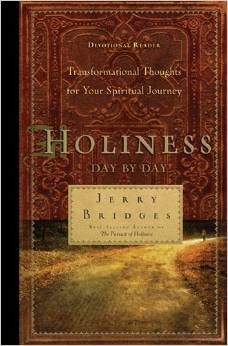
Holiness Day By Day

Years ago our pastor told about a southern plantation owner who left a $50,000 inheritance (perhaps equivalent to half a million dollars today) to a former slave who’d served him faithfully all his life. The estate’s lawyer duly notified the old man and told him the money was deposited at a local bank. 

Weeks went by, and the former slave never called for any of his inheritance. Finally, the banker called him in and told him again he had $50,000 available to draw on at any time. “Sir,” the old man replied, “do you think I can have fifty cents to buy a sack of cornmeal?” 

That story illustrates the plight of many Christians today. Paul wrote of preaching “the unsearchable riches of Christ” (Ephesians 3:8) -referring not to financial wealth but to the glorious truths of the gospel. It’s as if each of us has $50,000 available in the gospel, yet most of us are hoping we can squeeze out fifty cents’ worth. We don’t understand the riches of the gospel any more than the former slave understood his inheritance. 

Suppose also that the slave was not only poverty-stricken but also deep in debt for back rent. With his inheritance, he could not only pay off the debt but also buy his house. His inheritance far surpasses his debt. This is the truth of the gospel. We owe an enormous spiritual debt to God; there’s no way we can repay it. The gospel tells us Jesus Christ paid our debt, but it also tells us far more: We’re no longer enemies and objects of God’s wrath. We’re now His sons and daughters, heirs with Christ to all His unsearchable riches. This is the good news of the gospel.

 Source: Jerry Bridges. Holiness Day by Day: Transformational Thoughts for Your Spiritual Journey (page 7) 

Come Drink the Water of Life

water of lifeI love to hear others talk about how they came to know Jesus Christ as their personal Lord and Savior. Their stories always cause me to reflect on that day thirty-nine years ago when I became a child of God. They also remind me that we are never so far gone that God’s grace cannot reach us, we have never committed so great a sin that His mercy cannot forgive us, nor have we ever fallen so far from our walk with Him that His love will not restore us.

Regardless of what you have done, the new life in Christ is within your reach. Call out to Him and He will offer you life-giving water. This water brings an abundant life of joy and peace; even in the midst of a terrible tempest you will be able to rest knowing that Jesus is always with you.

This morning Ray Comfort shared part of his testimony on his Facebook page. I think he painted a beautiful picture of how Christ Jesus brought him to life.  I hope this blesses your heart as it did mine.

Comfort writes:

I love the scene in the movie “Ben Hur” where a Roman soldier is marching condemned galley-slaves through the desert. They stop in Nazareth for a break, but as the thirsty slaves are being given water, the head honcho says that Judah Ben Hur wasn’t to have a drop.  Judah collapses on the ground and gasps “God help me…”  Suddenly, a shadow comes over him and a hand gently lifts his weary head from …the dirt, and pours water into his parched lips.  I have watched that scene numerous times and have never failed to sob like a child, because what I see is so similar to what happened to me in my conversion experience. At the age of 20, I began to think deeply about life. I was very successful, financially secure, extremely happy, healthy,  I was my own boss, had a loving and beautiful wife…and I was suddenly very aware that, despite all my happiness, I was waiting around to die.  It seemed that the whole of humanity was in a long line, moving closer and closer to a 1000 foot cliff, and was, one-by-one, jumping off to their death. It was as though everyone accepted the inevitability of it, and so no one was trying to get out of line. So I, ever so reluctantly, stood in line and waited for my turn. At the age of 22 I heard the gospel for the first time. I am not exaggerating to say that I was like Ben Hur laying hopelessly in the dirt, and Jesus turned my head and poured the waters of life into my parched lips. I cannot express the relief and joy I found when I received the gift of everlasting life. To try and explain it to a non-Christian is like trying to explain light to a man who has been born blind.  To use another somewhat lacking analogy, it’s like looking at a crying newly delivered baby. You know what he is crying for, so you put him on the mother’s breast, and he immediately stops crying. He is suddenly gratified. He was born with an instinct to suckle, but he had no idea what he was looking for because he had never experienced it before. I had no idea that in my darkness I was searching for light, until I found it in Jesus Christ (see John 8:31-32).  He is the one who said “I am the light of the world. He who follows Me shall not walk in darkness, but have the light of life.” And Jesus is the only one who can say, “… whoever drinks the water I give him will never thirst. Indeed, the water I give him will become in him a spring of water welling up to eternal life” (John 4:13).
To learn more about receiving Christ’s life-giving water,visit www.NeedGod.com or read God’s Purpose for You.

Finding Outrageous Joy!

A few weeks ago I posted an article by Paul Tripp, “Don’t Confuse Knowledge and Success with Maturity.” It was a reminder that mental assent is not a true measure of our spiritual growth. In our efforts to grow in Christ we can find prideful joy in what we have learned and begin to think we are maturing in Christ. This mindset can lead to more learning and less serving.

Head knowledge is nothing if it is not put into action. Knowledge, wisdom, and understanding are all gifts from God; however, these gifts have been imparted to us in order to give them away to others. As empty vessels, God fills us with spiritual gifts, then He desires to empty us into the lives of others that they too might be filled and then emptied. In Matthew 28.18-20 this is called the Great Commission—our assignment to go make disciples.

Making disciples, growing in wisdom, knowledge, understanding, and serving others only happens after our salvation. Once we placed our faith in the finished work of Christ we begin our spiritual journey “until we all attain to  the unity of the faith, and of the knowledge of the Son of God, to a  mature man, to the measure of the stature which belongs to the  fullness of Christ” (Eph 4.13). This should be the burning passion of every Christian—growing into the “fullness of Christ.”

With our hearts set aflame with the consuming passion of glorifying Christ we find a life of great joy and fulfillment. However, just as our joy cannot come from mental assent, we cannot allow our joy to be rooted in ministry success. It is easy to find joy when everything you touch turns to gold for the kingdom. Joy comes easy when your Bible study group or church is growing rapidly. Joy isn’t hard to find when God is graciously using your testimony to lead numbers of people to Christ. Nevertheless, these successes should not determine our joy. They should lead us to a heart thankful to God for His Holy Spirit working through us, but they cannot be the reason for our joy.

In Tony Reinke’s post, “Why Rooting Joy in Ministry Success is disastrous,” we get a clear picture of where our true joy is to be found.

Reinke writes:

Is there a greater thrill than to know someone’s life has been permanently transformed because you reached out to them?

It is sweet to know your sister was saved through your series of conversations, or that you helped to disciple a struggling couple whose marriage was headed toward an inevitable divorce, or that you preached a sermon that God was kind enough to use in someone’s spiritual awakening.

Each of those things are treasured experiences — but none of them are intended to sustain our joy.

Jesus’ chose 72 of his followers and sent them out in his name. And they found incredible success in healing the sick and in watching demonically sabotaged lives get radically and immediately repaired. The experience must have been intoxicatingly fun.

But ministry success wasn’t the most stunning thing, and Jesus warned his followers of that when they returned. He told them to look beyond the fruit and see an eternal foundation: “do not rejoice in this, that the spirits are subject to you, but rejoice that your names are written in heaven” (Luke 10:20).

Written in heaven. That’s what he wanted them to see and us to see. Our highest joy is to know that our names are written in heaven. Knowing we are heirs to the bliss of God’s eternal presence is the foundation for our greatest joys.

And knowing that means:

  • Pastoring is not the most important fact about the pastor.
  • Missions is not the most important fact about the missionary.
  • The spiritual gift is not the most important fact about the Christian.

In the Slump

But Jesus’ words apply to ministry “sag” just as much as they apply to revival.

By unplugging the disciples’ joy from their ministry effectiveness, Jesus likewise protects them (and us) from depression during seasons of seeming fruitlessness. Seasons of what appears to be effectiveness and ineffectiveness come and go. Seasons of revival are replaced by seasons of stagnation.

Perhaps we can include all of the fluctuations of life. Marriage, parenting, work, school — all areas of life where we are called by God to bear fruit. Our joy is not rooted in our successes, and it’s not extinguished by our failures. Our joy is rooted in the unalterable fact that in Christ our names are written on heaven’s roll-call.

Paul reminded his ministry associates of this point (Philippians 4:3). And I need that reminder every morning. Because whether ministry is flourishing or not, we need to remind ourselves, and remind each other, that our names are written in heaven. And it is in heaven, in the presence of God forever, where our joy is rooted. May God protect us now, in the bustle of life and the wins and losses in ministry, from losing the sweetness of that truth.

Our joy should be rooted and grounded in our salvation. We are saved from sin, death, the grave, and hell. We stand fully justified before God. We have received the imputed righteousness of Christ. Our joy is found in this, “For God so  loved the world, that He  gave His only begotten Son, that whoever  believes in Him shall not perish, but have eternal life” (John 3.16). When our joy is rooted and grounded in the fact of our salvation then we will live life with an outrageous joy!

Way To Go Bubba!

In recent years we have heard a lot of athletes talking about their faith in Christ. Last week after winning the Masters golf tournament Bubba Watson gave the following interview with the Billy Graham Evangelistic Association:

Bubba Watson, first-time winner of a Masters Tournament who earned his green jacket on Easter Sunday, recently spoke about tweeting for God, the PGA Bible study he took part in and his newly adopted son.

Watson, 33, spoke with the Billy Graham Evangelistic Association after winning the 2012 Masters Tournament on Sunday. The golfer who tearfully thanked his “Lord and Saviour Jesus Christ” after the big win, said he utilises his Twitter account to spread his Christian faith.

Watson describes himself on his Twitter page as “Christian. Husband. Daddy. Pro Golfer”. The Christian golfer said he has lost at least 100 followers for tweeting biblical messages.

When Watson receives negative backlash for his biblical tweets, he responds with messages like “I will pray for u and ur family.” The golfer also quoted one of his favorite Christian rappers, Lecrae, saying he would like his followers to see God through him.

“Lecrae said it the best,” Watson told the Billy Graham Evangelistic Association. “He doesn’t want to be a celebrity. He doesn’t want to be a superstar. He just wants to be the middle man for you to see God through him.”

Watson maintained his Christian principles during the golf tournament by engaging in an hour-long Bible study with fellow golfers each week. He described the importance of being able to connect with both God and his peers.

“For me it’s a way to get back connected with the Bible and with God and Jesus. Now you know other people you can talk to, ask questions to, tell them what you’re thinking, tell them what’s going on in your life,” Watson said. “Getting more in the Word and realising that golf is just an avenue for Jesus to use me to reach as many people as I can.”

Watson, who recently adopted a one-month-old baby boy named Caleb with his former WNBA playing wife Angie Ball, also described his first church experience. According to Watson, twin girls from his neighbourhood convinced him to attend.

“The girls asked me to go to church,” Watson said. “And after a few times going I realised this is what I wanted to do. This is truth here. And I gave myself to the Lord.”

After he began dating Ball, the couple decided to live for Christ. Watson decided to get baptised with his wife in 2004 as a student at the University of Georgia.

“We wanted to be Christ followers,” Watson said. “We wanted to do the right thing. We started turning to the Lord for our decisions.”

The professional golfer, who said he has never taken a lesson, said he was grateful for the people around him and the opportunity to live his life for Christ.

“I’ve really got a good team around me trying to help me succeed,” Watson said. “Not just in golf, but off the golf course, to be a light for Jesus.”

Here Comes the Groom!

I have performed many weddings over my eighteen years in ministry. Just before the wedding starts I always tell the groom, “Be sure to watch as the doors open and you see your bride for the first time. It will be a memory you will never forget.” They usually nod out of respect not understanding exactly why I gave them that simple piece of advice. But then it happens, the doors open and standing there before them is their bride. The grooms eyes widen, his smile grows, and then a mental picture is taken that he will always remember. The long-awaited day of receiving his bride has arrived, and now they get to spend the rest of their lives together.

Jason Johnson writes in his post, “Easter and the Great Wedding to Come,” some of the truths from Scripture about the coming of The Groom for His bride—the church. One day Jesus will return for His bride, and their will be a great wedding on that day. It is a future day which should bring great anticipation, expectation, and preparation.

Johnson writes:

Throughout Scripture the marriage relationship is used as a picture of God’s relationship with his people. The bride and groom imagery highlights not only the covenantal love of God for his people but also their position within that relationship as the beneficiaries of his redemptive pursuit. A common theme woven within the thread of Scripture, from the Old to the New Testament, is God’s unwavering, unalterable, unceasing pursuit of his people into the consecrating and cleansing relationship of eternal marriage.

This is why the hallmark of all God’s grievances against his people is spiritual adultery, a heinous infidelity on the part of his people as they pursue lesser lovers and stray outside the conditions of the covenantal relationship (Jeremiah 13:27; Mark 8:38). God is a jealous God (Exodus 20:3-5; Deuteronomy 6:14-15), not because he lacks in companionship but because he longs for the exclusive affections of his people, as a groom does for his bride.

Jesus adopts the imagery of bride and groom as it pertains to his present application of the New Covenant and his future consummation of salvation through the great, eternal marriage with the church. In the Parable of the Ten Virgins (Matthew 25:1-13), Jesus allegorizes himself as the bridegroom and urges his disciples to stay alert, because they do not know the day or the hour he will return and take them to the eternal wedding celebration, i.e., the kingdom. He again refers to himself as the bridegroom while instructing his disciples on the proper purpose and function of fasting (Mark 2:18-20). As the bridegroom he will return to take his bride home, yet in the meantime, while he is present with them, fasting and longing for his return is not necessary.

Anticipation, Expectation, Preparation

The central focus of the wedding imagery in Scripture is anticipation, expectation, and preparation. It closely mirrors the traditional order of a first-century wedding, which involved a father arranging a bride for his son and paying the predetermined “bride price” on her behalf. The son would then return to his father’s house to make arrangements while the bride consecrated herself in eager anticipation for his final return for her. The terms of the relationship were sealed with ceremonial sharing of a glass of wine before the two parted ways and entered a time of anticipation and preparation leading up to the final wedding feast.

In strikingly similar fashion, God the Father has sent Jesus the Son to secure his bride, the church. The terms of the covenantal relationship between God and his people have been outlined in the gospel, and a great price has been paid by the Father to secure the relationship, namely, through the sacrifice of the Son on the Cross (1 Corinthians 6:20). The night before he would go to the Cross, Jesus shared a cup with his disciples as a means of symbolically sealing their new covenantal relationship. He instructed them to partake of this cup after his departure in remembrance of the price he paid for them and in anticipation of his future and final return for them.

Upon departure he will go to his Father’s house to prepare a place but will return one day to bring his bride home with him forever (John 14:2-3). The day and the hour of his return are unknown by all but the Father (Matthew 24:26). The bride of Christ, the church, eagerly waits and makes herself ready, setting herself apart for him and him alone, purifying herself for the day when he will return for her forever (1 Peter 1:13-16). He will come, and when he does the eternal wedding feast will commence (Revelation 19:7-8).

The recognition of the death and resurrection of Jesus at Easter is not an isolated act of God but a pinnacle point in the ongoing bride-groom narrative running throughout the current of Scripture. It’s the celebration of God acquiring a bride for his Son through the ultimate price of death paid on the Cross. It’s the height of God’s radical, redemptive pursuit of a sinful and broken people to secure them as his beautifully treasured Bride.

Wonder of the Gospel

Easter is the joyous celebration of the wonder of the gospel—that God has gone to great lengths to secure us for his Son. We are forever bound to Jesus by his death that purchased us and his resurrection that secured us into a future inheritance that is “imperishable, undefiled, and unfading, kept in heaven for you, who by God’s power are being guarded through faith for a salvation ready to be revealed in the last time” (1 Peter 1:4-5).

So we live in this present day as those who are consecrated to our future Groom—holy, set apart, uniquely and distinctively his. We live today with an eager sense of anticipation for the return of our Groom on a tomorrow yet to come. We live today as those who are valued not by the standards of this world but by the infinite price our Savior was willing to pay for us on the Cross. We are invaluably his, and he is ours.

We anticipate, we expect, and we prepare. Our Groom is coming back to take us home.