The Neglected Resurrection

Easter is a time when we celebrate the suffering, death, and resurrection of Jesus Christ. It is easy for us to focus on Christ’s suffering and death upon the cross; however, without the resurrection we have no hope for the forgiveness of sin or eternal life with God. Matthew Barrett shares with us what is gained through Christ’s resurrection in his article “The Neglected Resurrection.”

Barrett writes:

Too often in our churches the resurrection of Christ is a doctrine of secondary importance. It is neglected and forgotten until Easter comes around each year. The same disregard for the resurrection is seen in how we share the gospel. Christians tend to share the gospel as if Jesus died on the cross and that is the end of the story. We make a zip line from the crucifixion to “repent and believe,” contrary to the example Peter sets for us in Acts 2:22-24 and 4:26. The cross is central to our salvation, but what God accomplished there is incomplete unless the tomb is empty on Sunday morning. Therefore, the resurrection of Christ is vital “for us and our salvation” (to borrow from the Nicene Creed). But how exactly?

Our Regeneration Is Grounded in the Resurrection of Christ

Have you ever read the resurrection narratives and said, “Praise God! Because Christ has risen I am born again!” I know I haven’t. But if we truly understand the implications of Christ’s resurrection for our salvation, the new birth would be the first place to turn. Scripture teaches that our new birth—God’s supernatural, monergistic act whereby the Spirit makes us a new creature in Christ, replacing our heart of stone with a heart of flesh—is only possible because Jesus is risen.

Consider two passages. According to Peter, God has “caused us to be born again to a living hope through the resurrection of Jesus Christ from the dead” (1 Pet 1:3). The same God who raised Christ from the grave has also raised us from spiritual death to spiritual life. And the apostle Paul says that while we were dead in our trespasses and sins, God, being rich in mercy, “made us alive together with Christ” and “raised us up with him and seated us with him in the heavenly places in Christ Jesus” (Eph 2:5-6; cf. Col 3:1).

Because God has raised Christ from the dead, he can make us alive together with Christ by the power of the Holy Spirit. Christ’s resurrection life is the very basis and means by which we are born again.

Our Justification Is Grounded in the Resurrection of Christ

Those who believe in the God who raised Christ from the dead are counted righteous. As Paul says in Romans 4:23-25, like Abraham we are counted righteous, for we believe in him “who raised from the dead Jesus our Lord, who was delivered up for our trespasses and raised for our justification.” By raising Jesus from the dead, God approved the work of Christ on the cross for our sins. God declared his Son’s work complete! The penalty for our sin has been paid, and no guilt remains. As Wayne Grudem explains:

When the Father in essence said to Christ, “All the penalty for sins has been paid and I find you not guilty but righteous in my sight,” he was thereby making the declaration that would also apply to us once we trusted in Christ for salvation. In this way Christ’s resurrection also gave final proof that he had earned our justification (Systematic Theology).

Jonathan Edwards also states the matter precisely:

For if Christ were not risen, it would be evidence that God was not yet satisfied for [our] sins. Now the resurrection is God declaring his satisfaction; he thereby declared that it was enough; Christ was thereby released from his work; Christ, as he was Mediator, is thereby justified (Miscellanies, Vol. 13, 227).

In other words, if God did not raise Christ from the dead, he would essentially be saying, “I am not satisfied with your atoning work on behalf of sinners.” If this were the case, we would still be dead in our sins, as Paul says in 1 Corinthians 15:17. And if we are still dead in our sins then we stand guilty before a holy God, unjustified and condemned. It is hard to improve upon the words of Martyn Lloyd-Jones:

If it is not a fact that Christ literally rose from the grave, then you are still guilty before God. Your punishment has not been borne, yours sins have not been dealt with, you are yet in your sins. It matters that much: without the Resurrection you have no standing at all (The Assurance of Our Salvation, 492).

Our Sanctification Is Grounded in the Resurrection of Christ

In Romans 6, Paul explains that we can “walk in newness of life” because Christ was raised from the dead. We are not to continue in sin, for how, as Paul asked, “can we who died to sin still live in it?” We have been baptized into the death of Christ so that “just as Christ was raised from the dead by the glory of the Father, we too might walk in newness of life” (Rom 6:3-4). But Paul is not finished. He has much more to say about the resurrection and our sanctification.

For if we have been united with him in a death like his, we shall certainly be united with him in a resurrection like his. We know that our old self was crucified with him in order that the body of sin might be brought to nothing, so that we would no longer be enslaved to sin. For one who has died has been set free from sin. Now if we have died with Christ, we believe that we will also live with him. We know that Christ, being raised from the dead, will never die again; death no longer has dominion over him. For the death he died he died to sin, once for all, but the life he lives he lives to God. So you also must consider yourselves dead to sin and alive to God in Christ Jesus (Rom 6:5-12).

Paul’s last two sentences are especially powerful. As Christians, we are united to Christ. Christ died to sin, and so also must we consider ourselves dead to sin. But Christ also came back to life. The life he lives he lives to God. Therefore, as those who are in Christ, we are alive to God. No longer are we to walk according to the flesh, but according to the Spirit. Our old, unbelieving, sinful, condemned self has been crucified with Christ. And now that we are new creatures, we are no longer enslaved to sin, but by the power of the Spirit are able to walk in this newness of life.

None of this, however, is possible if Christ remains in the tomb. His resurrection is our victory over the reign of sin. Only because he has risen do we have the assurance, the confidence, and the ability to now walk in godliness. In this light, therefore, Paul’s admonition is all the more convicting:

If then you have been raised with Christ, seek the things that are above, where Christ is, seated at the right hand of God. Set your minds on things that are above, not on things that are on earth. For you have died, and your life is hidden with Christ in God. When Christ who is your life appears, then you also will appear with him in glory (Col 3:1-4).

The Climax of Redemptive History

Richard Gaffin once wrote that not only is the resurrection of Christ the pivotal factor in Paul’s soteriology, the “climax of the redemptive history of Christ,” but it is also that “from which the individual believer’s experience of redemption derives in its specific and distinguishing character and in all aspects of its inexhaustible fullness” (Resurrection and Redemption, 135). 

I couldn’t agree more. If we miss the importance of Christ’s resurrection for our salvation, then we have, as Sinclair Ferguson observes, misunderstood the gospel, severing our salvation from the lordship of Christ (Resurrection and Redemption, 6). How unthinkable this must be for the Christian who, as Calvin explains, believes that “our whole salvation and all its parts are comprehended in Christ” (Institutes II.16.19).
Why Do You Seek The Living Among the Dead?

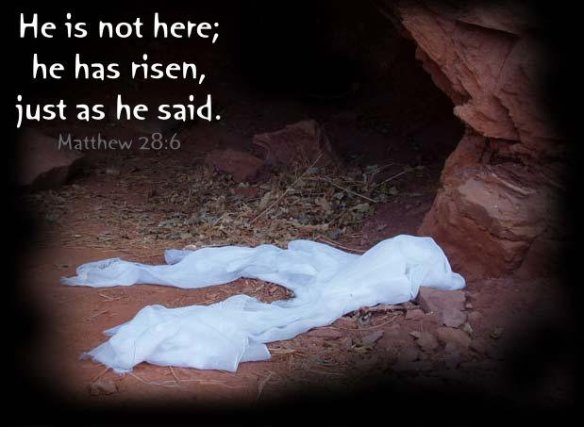
“But on the first day of the week, at early dawn, they came to the tomb bringing the spices which they had prepared. And they found the stone rolled away from the tomb, but when they entered, they did not find the body of the Lord Jesus. While they were perplexed about this, behold, two men suddenly stood near them in dazzling clothing; and as the women were terrified and bowed their faces to the ground, the men said to them, “Why do you seek the living One among the dead? He is not here, but He has risen. Remember how He spoke to you while He was still in Galilee, saying that the Son of Man must be delivered into the hands of sinful men, and be crucified, and the third day rise again.” And they remembered His words, and returned from the tomb and reported all these things to the eleven and to all the rest” (Luke 24.1-9 NASB).

Real Bad

In a recent post, Timothy Keller discussed Jesus’ attitude toward all the difficulties, pain, and suffering we face.

Keller writes:

The story of Jesus standing before the tomb of Lazarus is an endless source of insight for me. As he was about to raise Lazarus from the dead, Jesus was not smiling. He was angry. He was weeping. Why? Because death is a bad thing! Jesus wasn’t thinking, ‘They think that this is a tragedy, but no harm done! I’m about to raise him from the dead. This looks like a bad thing, but it’s not. It’s really a good thing! It’s a way for me to show my glory. It’s really exciting! I can’t wait!’ He wasn’t thinking that. Jesus was weeping at the tomb, because the bad thing he’s about to work for good is bad. The story of Lazarus does not give you a saccharine view of suffering, saying bad things are really blessings in disguise or that every cloud has a silver lining. The Bible never says anything like that! God will give bad things good effects in your life, but they’re still bad. Jesus Christ’s anger at the tomb of Lazarus proves that he hates death. He also hates loneliness, alienation, pain, and suffering. Jesus hates it all so much that he was willing to come into this world and experience it all himself, so that eventually he could destroy it without destroying us.

There’s no saccharine view in the Christian faith. The promise is not that if you love God, good things will happen in your life. The promise is not that if you love God, the bad things really aren’t bad; they’re really good things. The promise is that God will take the bad things, and he’ll work them for good in the totality.”

Many people have questioned God’s love for them after they have placed their faith in Christ. They don’t understand why they still suffer even though they are a Christian. Like the seed sown in the shallow soil they wither under the heat of discomfort and eventually turn away from God completely.

Jesus never promised us a life without trouble, in fact He actually told us in this life we would have troubles (John 16.33). Jesus didn’t come to give us our hearts desire. He came to deliver us from God’s wrath. He came to give us life eternal in heaven. He came because of His great love for us.

Tomorrow we will continue our study of Jesus’ “I Am” statements in the book of John. As we look at the broader story around Jesus’ declaration, “I am the resurrection and the life” (John 11.25) we will discover some of the similarities of Lazarus being raised from the dead physically and our being raised spiritually.

I hope to see you Resurrection Sunday at 10:45 a.m. as we celebrate Jesus’ victory over sin, death, hell, and the grave.

Here is a link for directions to Living Oaks Baptist Church.

Home Free!

As a pastor I have walked along side many who have been diagnosed with some deadly disease. I have seen some healed by the hand of God, some who were healed through various types of treatment, and others who received the ultimate healing through death. It has been humbling to watch as they boldly face their terrible ordeal with the peace of knowing comfort can only be found in God.

I have never faced anything which compares to that type of suffering; however, when faced with a sorrowful burden I have always remembered a couple of verses:

  • “For I consider that the sufferings of this present time are not worthy to be compared with the glory that is to be revealed to us” (Romans 8.18).
  • “For momentary, light affliction is producing for us an eternal weight of glory far beyond all comparison” (2 Corinthians 4.17).
  • “My grace is sufficient for you, for My strength is made perfect in weakness.” Therefore most gladly I will rather boast in my infirmities, that the power of Christ may rest upon me” (2 Corinthians 12.9).
  • “And I heard a loud voice from the throne, saying, ‘Behold, the tabernacle of God is among men, and He will dwell among them, and they shall be His people, and God Himself will be among them, and He will wipe away every tear from their eyes; and there will no longer be any death; there will no longer be any mourning, or crying, or pain; the first things have passed away'” (Revelation 21.3-4).

As I go through difficult times I try to keep things in perspective. This life is all I know, but it isn’t all I will know. There will come a day when all this will pass away and I will stand before my Savior and Lord. All the pains, sorrows, disappointments, and fears will be a thing of the past, and I will be home free.

Christianity in Crisis

What are Jesus’ views on the hot topics in America today? Should I abandon the church and just follow Jesus? Did Jesus have anything to say about politics? These are just a few of the questions Trevin Wax deals with in his response to Andrew Sullivan’s Newsweek Cover Story.

Trevin writes:

Newsweek’s cover story, written by popular author Andrew Sullivan, encourages Americans to “forget the church” and just “follow Jesus.” According to Sullivan:

We inhabit a polity now saturated with religion. On one side, the Republican base is made up of evangelical Protestants who believe that religion must consume and influence every aspect of public life. On the other side, the last Democratic primary had candidates profess their faith in public forums, and more recently President Obama appeared at the National Prayer Breakfast, invoking Jesus to defend his plan for universal health care. The crisis of Christianity is perhaps best captured in the new meaning of the word “secular.” It once meant belief in separating the spheres of faith and politics; it now means, for many, simply atheism. The ability to be faithful in a religious space and reasonable in a political one has atrophied before our eyes.

Sullivan sees the problem of a politicized faith, one that focuses relentlessly on gaining power, changing laws, and regulating the morality of others. He sees contemporary Christianity as a faith obsessed with getting doctrines about Jesus right to the exclusion of what He actually taught us to do and be. This leads him to ask some piercing questions:

What does it matter how strictly you proclaim your belief in various doctrines if you do not live as these doctrines demand? What is politics if not a dangerous temptation toward controlling others rather than reforming oneself?

From the Catholic Church’s teachings on sexuality to evangelical Christian support of torture, Sullivan makes his way through a long list of perceived threats to the centrality of Christ among believing people.

So what’s the solution? Sullivan points us toward Francis of Assisi and Thomas Jefferson. Francis – for the simplicity of his vision for following Jesus. Jefferson – for the way he stripped away all the miracles of incarnation and resurrection and got to the greatest miracle of all: Jesus’ message of love.

A Response

Where to start with an article like this?

On the one hand, Sullivan is absolutely right to point out the politicized nature of Christianity in the West. He has witnessed the counterfeit gospel of activism that gives us “culture warriors” from the Right and the world’s “errand runners” from the Left. He has seen what happens when churches unite around a cause rather than the cross, and the results are indeed repugnant. If we deny the shortcomings of the church or minimize the scandals, the abuse of power, or the existence of injustice behind our stained-glass windows, we are departing from the righteous vision of Jesus’ kingdom and joining the first-century Pharisees.

Likewise, we should admit that we have too often been known more for our denunciations of those outside our walls than for our passion to uproot our own self-righteous hypocrisy, something Jesus was always confronting in His day. Sullivan sees many of the problems within contemporary Christianity with a perception that should give us pause and bring us back to our knees.

Jesus without Jesus

Unfortunately, his solution is woefully inadequate. He wants to return to the simple message of Jesus as if that message can be divorced from the Man who delivered it. Despite his protests against a politicized faith, Sullivan is saying we should follow a Man whose primary message concerned a kingdom. You can’t get more political than that.

It’s interesting to see how those who advocate a return to the words of Christ often display a frightening ignorance of what Jesus actually said. The primary message of Jesus was not love – at least, not love in our sense of the world. The message of Jesus was Love with a capital “L” – meaning, His message was about Himself. It was about His kingdom, His identity as king, and the cross that became His throne.

So when Sullivan says that Jesus would have been “baffled” by current debates over homosexuality or abortion, I would counter that Jesus spoke to both of these issues and more, albeit indirectly:

  • The sexual ethic He put forth is so radical that even a lustful thought after another human being is considered sinful.
  • The picture of God’s intention of marriage – male and female from the dawn of creation – is reinforced so strongly that divorce ought to become unthinkable.
  • Abortion? How can we listen to Jesus talk about God’s care for a fallen sparrow or watch Him bless the little children and believe He would have nothing to say to those who would still the heartbeats of those who are “more precious” to the Father than the birds of the air?

What’s more, Sullivan’s assertion that we should return to what Jesus asked us to do and be (“rather than the unknowable intricacies of what we believe he was”) flies in the face of Jesus’ own words to His disciples. Jesus is the One who raises the eternal stakes of understanding His messianic identity. Over and over again in the Gospels, we see the disciples asking, “Who is this man?” The wind and seas obey. The dead are raised. The lame walk. The deaf speak. Jesus is acting and talking like He’s in control. He’s either crazy or He’s king of creation.

Sullivan wants to take Christ’s teaching without Christ Himself. His vision tries to deliver Christ’s message of love without the atoning cross that gives love its meaning. It wants Christ’s justice without the victorious resurrection that launches the new world God has promised , the new world that totally changes the landscape for how we view everything: ethics, morals, politics, art, law.

Jesus’ teachings are not just about embarking on a new journey, embracing a new way of life, or experiencing a new spirituality. They are about His ushering in a new world order – a kingdom that encompasses everything.

Snip away at the miracles, like Thomas Jefferson, and you may be left with only the red letters. But even those red letters testify to the world-changing news of the kingdom’s arrival. This isn’t a Jesus whose message you can understand apart from His cross and resurrection.

The answer to Andrew Sullivan is to point back to everything the Gospels tell us. Let’s not isolate the sayings of Jesus we like and fit Him into our vision for how the world should work. Instead, let’s fall at the feet of King Jesus, ready and willing to do whatever it takes to fit our lives into His vision, a vision of the world to come that has crashed into the world that is.