
My Spiritual Birthday!

today is the day of salvation_t_nvI can’t believe it has been thirty-nine years! So many things have happened since January 17, 1974. Life has not always been the easiest, but the decision I made that day has influenced the rest of my life.


January 17, 1974—I was nine years old and attending a church service at Parkland Baptist Church in Tulsa. Brother J. Harold Bryant was the pastor. I really can’t remember what he said that morning; however, at the end of his message I told my dad, “I need to be saved.” He took me by the hand, walked me down to the front of the church, and we talked with Pastor Bryant about what I needed to do to become a Christian. He simply led me in a prayer admitting I was a sinner, believing that Jesus died for my sins, that He arose from the dead, and that I was committing the rest of my life to Him.

When we got home that afternoon I wrote the following:

“From this day on I will be a Christian and have everlasting life. For God has been knocking on my heart’s door. He has been wanting me to be saved. But I was to [sic] scared and wouldn’t let him in and I knew I should let him. So I let him in. Bobby Pittenger January 17, 1974”

Now I realize the grammar is not that great, but I was only nine! Nevertheless, notice what I understood:

1) God was pursuing me

2) Becoming a Christian means everlasting life

3) We must choose to accept His offer of forgiveness and eternal life

4) We must turn from our sinful ways and commit to living a life of righteousness

Sometimes I think adults make it way too difficult. Jesus told us to come with a child-like faith. We want to know all the details and have everything figured out before we make a decision. The only way to become a Christian is to admit our spiritual poverty, cry out to Jesus, and then live out the decision we have made.

Over the last thirty-nine years I have made a lot of mistakes, and for several years, most people could not tell that I was a Christian by the way I was living. However, God’s grace has been sufficient for me. At the age of twenty-six I realized I had spent several years out of the church, and I was no longer sure if the decision I made in 1974 was genuine. So, once again I made the long journey down to the front of the church and recommitted my life to Jesus. That was twenty-three years ago, and my life has been filled with incredible peace and joy. Regardless of what happens in this short life, I know that one day I will stand before the King of kings and Lord of lords and will worship Him forever!

How about you? Has God been knocking at your heart’s door? He wants you to be saved. If you are not sure, please contact me at Living Oaks Baptist Church and I will tell you how to become a Christian.

Wisdom and the Will of God

Knowing GodThroughout the years of ministry I have often had people ask me to help them in finding God’s will in different situations. It may have been about getting married, buying a new home or car, starting a family, or even which college to attend. Others have approached me about what they are supposed to learn while going through hardship. They are seeking wisdom to help them better understand what God desires for their life.

The Bible makes it clear we are to seek godly wisdom. The book of James tells us to ask God and He will give us wisdom freely. The wisdom of God gives us insight to weigh all the possibilities and then make a decision that best glorifies God. Too often we assume that God’s wisdom will give us omniscient understanding of all that is happening. This is not the Biblical definition of wisdom.

In his book, “Knowing God,” J.I. Packer gives a simple illustration which helps us better understand how godly wisdom works in our lives.

Packer writes:

If you stand at the end of a platform at York Station, you can watch a constant succession of engine and train movements which, if you are a railway enthusiast, will greatly fascinate you. But you will only be able to form a very rough and general idea of the overall plan in terms of which all these movements are being determined (the operational pattern set out in the working timetable, modified if need be on a minute-to-minute basis according to the actual running of the trains).

If, however, you are privileged enough to be taken by one of the higher-ups into the magnificent electrical signal-box that lies athwart platforms 7 and 8, you will see on the longest wall a diagram of the entire track layout for five miles on either side of the station, with little glowworm lights moving or stationary on the different tracks to show the signalmen at a glance exactly where every engine and train is. At once you will be able to look at the whole situation through the eyes of those who control it: you will see from the diagram why it was that this train had to be signalled to a halt, and that one diverted from its normal running line, and that one parked temporarily in a siding. The why and the wherefore of all these movements becomes plain once you can see the overall position.

Now, the mistake that is commonly made is to suppose that this is an illustration of what God does when he bestows wisdom: to suppose, in other words, that the gift of wisdom consists in a deepened insight into the providential meaning and purpose of events going on around us, an ability to see why God has done what he has done in a particular case, and what he is going to do next. People feel that if they were really walking close to God, so that he could impart wisdom to them freely, then they would, so to speak, find themselves in the signal-box; they would discern the real purpose of everything that happened to them, and it would be clear to them every moment how God was making all things work together for good. Such people spend much time poring over the book of providence, wondering why God should have allowed this or that to take place, whether they should take it as a sign to stop doing one thing and start doing another, or what they should deduce from it. If they end up baffled, they put it down to their own lack of spirituality.

Christians suffering from depression, physical, mental or spiritual (note, these are three different things!) may drive themselves almost crazy with this kind of futile inquiry. For it is futile: make no mistake about that. It is true that when God has given us guidance by application of principles he will on occasion confirm it to us by unusual providences, which we will recognize at once as corroborative signs. But this is quite a different thing from trying to read a message about God’s secret purposes out of every unusual thing that happens to us. So far from the gift of wisdom consisting in the power to do this, the gift actually presupposes our conscious inability to do it, as we shall see in a moment.

We ask again: what does it mean for God to give us wisdom? What kind of a gift is it?

If another transportation illustration may be permitted, it is like being taught to drive. What matters in driving is the speed and appropriateness of your reactions to things and the soundness of your judgment as to what scope a situation gives you. You do not ask yourself why the road should narrow or screw itself into a dogleg wiggle just where it does, nor why that van should be parked where it is, nor why the driver in front should hug the crown of the road so lovingly; you simply try to see and do the right thing in the actual situation that presents itself. The effect of divine wisdom is to enable you and me to do just that in the actual situations of everyday life. 

To drive well, you have to keep your eyes skinned to notice exactly what is in front of you. To live wisely, you have to be clear-sighted and realistic — ruthlessly so—in looking at life as it is. Wisdom will not go with comforting illusions, false sentiment, or the use of rose-colored glasses. Most of us live in a dream world, with our heads in the clouds and our feet off the ground; we never see the world, and our lives in it, as they really are. This deep-seated, sin-bred unrealism is one reason why there is so little wisdom among us—even the soundest and most orthodox of us. 

SOURCE: Knowing God (p. 102-104), Packer, J. I. (1993)  Intervarsity Press.

I Want a Pastor Who…

HeartI recently celebrated eight years serving as pastor of Living Oaks Baptist Church. My church family surprised me by having a party in place of our Sunday evening service. Folks shared testimonies of the many ways they had been blessed by God during our eight years together.

As I listened to their stories of appreciation for my service, a couple of things struck me. First, I was surprised at just how much they love me–more than I was aware. I never had a reason to doubt their love, support, or commitment; however, I had never really considered their feelings for me. I cannot begin to describe the overwhelming joy that filled my heart as I listened to their wonderful expressions of love.

I was equally surprised as each person shared how they had been touched by a specific event. It was surprising–I would have never guessed that those moments we spent together were so meaningful. As a pastor, you think you will be remembered for your powerful sermons, great vision, and strong leadership, and even though they were thankful for these, that was not their main focus. Late night visits at the emergency room, canceled family plans to be by their side after a loved one had died, calls offering help while their spouse was out-of-town, or just being available at their time of need were just a few of things they listed. I remember sitting there thinking, “God, I never realized just how much church members want a pastor, a shepherd, and a friend for physical, mental, emotional, and spiritual needs.

I am thankful for the way God has gifted me with a pastor’s heart. I am thankful for the godly men He placed in my path to train me up in the proper ways of ministry. I am thankful that early on in my ministry I learned that “If you want to be a shepherd, you have to smell like the sheep.” That one statement alone changed my outlook on pastoring. I pray, study, and work hard to prepare sermons and provide direction and leadership for the church. However, none of those things are important if the members do not believe that their pastor loves them, sacrifices for them, and protects them like they are his own family.

I was reminded of these things as I read an article by Thom RainerTen Things Church Members Desire in a Pastor.” It is a simple list that should help almost every pastor in better understanding what our members really need from their pastor.

Rainer writes:

Many of my articles come from the perspective of pastors. That will not change in the future. I am an advocate of pastors and I desire God’s best for them. I have no plans to change my advocacy role.

As a change of pace, however, I recently asked a few hundred laypersons to write down what they desired of a pastor. Their responses were open-ended, and there was no limitation on the number of items they could list. Though my approach was not scientific, these laypersons did represent over sixty churches.

Here are their top ten responses in order of frequency. Since many of them gave one or more sentences as a response, I can provide a representative comment by each of the responses.

  1. Love of congregation. “If we know that our pastor loves us, everything else falls in place. If he doesn’t, nothing else matters.”
  2. Effective preaching. “I don’t have any expectation that my preacher be one of the best in the world, I just want to know that he has spent time in the Word each week to teach us effectively and consistently.”
  3. Strong character. “No pastor is perfect, but I do want a pastor whose character is above reproach on moral, family, and financial issues.”
  4. Good work ethic. “I don’t want either a workaholic pastor or a lazy pastor.  Unfortunately, our last two pastors have been obviously lazy.”
  5. Casts a vision. “Our church has so much possibility; I want to hear what we will do to make a difference in our community and the world.”
  6. Demonstrates healthy leadership. “Most of the pastors in my church have demonstrated a good balance; they have been strong leaders but not dictators.”
  7. Joyous. “Our current pastor is a man of joy. His joy and enthusiasm are contagious. I love him for that!”
  8. Does not yield to critics. “I know that every pastor serving today has his critics. And I know it’s tough to deal with them. I just want these pastors to know that we supporters are in the majority. Please don’t let the minority critics dictate how you lead and serve.”
  9. Transparent. “Every pastor that I have had has been open and transparent about the church and the direction we are headed. It sure has made our church healthier.”
  10. Models evangelism. “Our pastor is passionate about sharing the gospel. His heart and attitude are contagious.”

What do you think about this list? What would you add from the perspective of either a pastor or a layperson?

Source: “Ten Things Church Members Desire in a Pastor.”

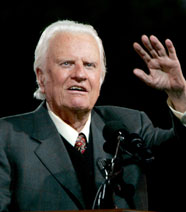
“A Fresh Vision for America” by Billy Graham

From the Desk of Billy Graham:

All of us care a great deal about our country. The intensity of opinions and feelings during the long political campaign showed the depth of that concern.

Now with the votes counted, it is important to remember that whether we are personally pleased with the outcome or not, God wants us to pray for those chosen to be our leaders—at the national, state, and local levels. The Bible urges us to do so with both respect and thanksgiving (see 1 Peter 2:17; 1 Timothy 2:1–3).

We must also remember that no election will ever solve America’s most basic problems. That is because the trouble, at its root, is in the human heart, and the only path to true restoration—for a person or for a nation—is through repentance. The Bible says, “Repent therefore, and turn back, that your sins may be blotted out, that times of refreshing may come from the presence of the Lord” (Acts 3:19–20, ESV).

Only the Gospel, God’s Good News, has the power to change lives, heal hearts, and restore a nation.

I want that to happen in America, and I know you want that as well. I turned 94 on the day after the election. Although my age and health have limited me physically in recent years, I plan to spend the next 12 months, if God permits, doing all that I am able to do in helping to carry out a fresh vision God has given us—a vision to bring the Gospel of Jesus Christ to every possible place in America by the time of my 95th birthday. It’s called My Hope, and I pray that you will partner with us.

In the days of the Prophet Jeremiah, God commanded His people to “seek the peace and prosperity” of the land where He had placed them and to “pray to the Lord for it” (Jeremiah 29:7, NIV). I ask you to join me in committing the next 52 weeks to faithful, even fervent, prayer for this land in which we live. You can start by making a list of people you know personally who need Jesus Christ and then begin praying regularly for them, individually by name.

Pray also for your neighborhood and your city, asking God to bring men, women, teens, and children—people from your own community—to Himself during the next 12 months. And pray along with me for the nation, asking God for mercy on America and for a great spiritual awakening.

My son Franklin is spearheading this vision and outreach, working in partnership with thousands of churches across every state in the country (ask your pastor if your church plans to take part). Franklin will be sending you more details on how this will work through the coming months and how you can participate.

At the climax of My Hope one year from now, if God enables me, I want to call the entire nation to repentance and lasting hope in Jesus Christ. The message I give will be presented in a fresh format, different from preaching at a Crusade, but the same Gospel. I believe we will see God work in a mighty way.

It is my passionate, heartfelt desire to see God change hearts and lives in every community in America, and I pray He will stir the same desire in you.

Will you join Franklin and me in this bold venture?

May God bless you,

Billy Graham              

 Source: Billy Graham Evangelistic Association

7 Things a Pastor’s Kid Needs from a Father

Here is a great post by Barnabas Piper:

Pastors, your position is a demanding one, and those demands bring unique struggles on your family. A pastor’s wife bears a great burden, but she usually enters into the ministry willingly. A pastor’s children, though, are carried on the current of their parents’ calling. It is often a life of singular struggle and uncommon needs. These struggles often stem from the failures of the father. This isn’t to cast full blame on pastors for their children’s problems. But it is to say that pastors need to work to be good dads.

My own father has worked hard at this. He had his blind spots and weaknesses, and they have been a source of tension between him and me. But to this day, in his 33rd and last year of pastoral ministry, he has never stopped trying to be a better father. As I wrote this I thought of his failures, yes, but I also thought of successes. Lots of them. I also thought of dozens of conversations with fellow PKs about such struggles and their own relationships with their fathers. So know that my writing does not stem from bitterness of heart or some jaded desire to expose a good man’s faults. I love my dad. My desire is to see struggles avoided or defeated for other pastors and PKs.

So here are seven of the most significant ways a pastor can be a good father to his children. Pastors, your child needs . . .

1. A dad, not a pastor

Yes, you are called to pastor your family, but PKs want a dad–someone who plays with them, protects them, makes them laugh, loves their mom, gives hugs, pays attention, teaches them how to build a budget and change the oil and field a ground ball. We want committed love and warmth. We want a dad who’s not a workaholic. It’s hypocritical to call your congregation to a life of love, sacrifice, and passionate gospel living while neglecting your own family. If a mortgage broker or salesman works too much at 60 hours a week, so do you. Leave work and be present for your kids. Your children will spit on your pastoring if they miss out on your fathering.

2) Conversation, not sermons

Sermons are an effective way to communicate biblical truth to a congregation, but not to your kids (or wife). Preaching at your children will stunt their view of Scripture, dull their interest, and squelch what passion you are trying to stir. Speak TO your children about the Bible in a way that’s interesting, applicable, and conversational. Help them see the Bible as a normal part of life. Rather than teach lessons, imbue your conversation with biblical worldview to help your children shape their life lenses. That way they’ll think they, too, can interact with this important book. Sermons at home separate them from the Word by implying that only the learned can understand it.

3) Your interest in their hobbies

Jonathan Edwards may be your homeboy or Seth Godin your muse, but your first-grade daughter doesn’t give a flip. Her love language is playing Barbies and dancing to Taylor Swift. Your son wants to build a Lego fort, beat you soundly at Modern Warfare on Xbox, or learn how to run a 10-yard out pattern. Your hobbies are yours alone, but engaging your children’s interests speaks love that matters deeply to them.

4) To be studied

It gets harder to share time with kids as they get older. So study them as hard as you study your Greek lexicon. They’re more important, anyway. Would your high school son appreciate going out to pizza with you or chilling on the couch and watching college football on a Saturday afternoon? Does your teenage daughter want you to take her shopping or to coffee? Maybe they don’t want recreation but just help–so talk through their friend challenges or algebra problems, whichever are the most pressing. LEARN these things, even if it seems like there are no right answers. Teenagers are hard; they treat parents like idiots all the time. But these acts, when done consistently, add up. Make them a pattern so that when your kids are done thinking you are a moron they have a path to walk with you.

5) Consistency from you

No one can call hypocrisy on you faster than your kids (and wife), and nothing will undermine you in the home faster. If you stand in the pulpit on Sunday and talk about grace after spending Friday and Saturday griping at your family, grace looks awfully cheap and unappealing to your son in the second row. If, however, you treat your son as if you need his grace and forgiveness for your crappy attitude, it may open a door to God’s grace. (And use phrases like “crappy attitude”; it sounds more like you actually know what you’re apologizing for.)

If you act like the great shepherd in the pulpit but the hired hand who runs away at home, your children will see church and all it entails as phony because you are phony. If you encourage a life of joy but are morose or exhort your people toward a life of sacrifice but are lazy and spendthrifty, nobody will notice faster than those in your home. To your family, your interactions with God and them are far more important than your Sunday sermons.

6) Grace to fail

Pastors speak much about grace. It is the basis of our salvation and the source of hope. But when the rubber meets the road, do you offer enough of it to your children? PKs feel enormous pressure to be “good” and to be confident in all things biblical. But we are often not good and often lack confidence in biblical realities. We sin and doubt like everyone else, but when we do, the road to restoration and peace often feels like an impossible one to travel. Are we allowed the same grace to fail and to doubt (assuming you preach grace to your congregation)?

7) A single moral standard

One of the graces PKs need is a single moral standard. Too many PKs feel the pressure of their fathers’ priestly profession in our moral lives. The pastor and elder qualifications in 1 Timothy and Titus feel like a threat: “If you screw up, your father not only looks bad, he will be out of a job.” But those standards are the same ones that every Christian should be held to (other than the ability to teach). Nobody else’s dad is at risk of being unemployed if his kid is rebellious, but mine is. The additional pressure to be morally upstanding does not help my heart. It creates a convoluted soul environment in which temptation to rebel and temptation to be a hypocrite battle the desire to honor Jesus and my dad.

You have heard that it was said PKs should be holier than their peers, and their parents should raise them better, but Jesus says to us all, “Be holy for I am holy.” So it should be.

Barnabas Piper works in marketing and acquisitions at Moody Publishers in Chicago. He is the son of John Piper. Source: The Gospel Coalition.