
“We Know They Are Killing Children” by John Piper

sanctity of lifeOne biblical principle of justice is that the more knowledge we have that our action is wrong, the more guilty we are, and the more deserving of punishment (Luke 12:47–48). The point of this blog post is that we know what we are doing — all America knows. We are killing children. Pro-choice and Pro-life people both know this.

But before I show that, let’s clarify what the Supreme Court did forty years ago today. In Roe v. Wade the Supreme Court in effect made abortion on demand untouchable by law. The way this was done was with two steps.

One step was to say, laws may not prevent abortion, even during the full nine months, if the abortion is “to preserve the life or health of the mother.” The other step was to define “health” as “all factors — physical, emotional, psychological, familial and the woman’s age — relevant to the well-being of the patient.”

For forty years this has meant that any perceived stress is a legal ground for eliminating the child. We have killed fifty million babies. And what increases our guilt as a nation is that we know what we are doing. Here’s the evidence that we know we are killing children.

1. Anecdotally, abortionists will admit they are killing children.

Many simply say it is the lesser of two evils. I took an abortionist out to lunch once, prepared to give him ten reasons why the unborn are human beings. He stopped me, and said, “I know that. We are killing children.” I was stunned. He said, “It’s simply a matter of justice for women. It would be a greater evil to deny women the equal right of reproductive freedom.” Which means women should be no more encumbered by the consequences of an unplanned pregnancy than men. That equal freedom from the burden of bearing unwanted children is the basis for abortion that President Obama refers to again and again when he talks about equal rights for women. We know we are killing children.

2. States treat the killing of the unborn as a homicide.

We know what we are doing because 38 States (including Minnesota) treat the killing of an unborn child as a form of homicide. They have what are called “fetal homicide laws.”

It is illegal to take the life of the unborn if the mother wants the baby, but it is legal to take the life of the unborn if she doesn’t. In the first case the law treats the fetus as a human with rights; in the second case the law treats the fetus as non-human with no rights.

Humanness is defined by the desire of the strong. Might makes right. We reject this right to define personhood in the case of Nazi anti-Semitism, Confederate race-based slavery, and Soviet Gulags. When we define the humanness of the unborn by the will of the powerful we know what we are doing.

3. Fetal surgery treats the unborn as children and patients.

High risk pregnancy specialist, Dr. Steve Calvin, in a letter some years ago to the Arizona Daily Star, wrote, “There is inescapable schizophrenia in aborting a perfectly normal 22 week fetus while at the same hospital, performing intra-uterine surgery on its cousin.” When the unborn are wanted, they are treated as children and patients. When they are not wanted, they are not children. We know what we are doing.

4. Being small does not disqualify personhood.

The five-foot-eight frame of a teenage son guarantees him no more right to life than the 23-inch frame of his little sister in her mother’s arms. Size is morally irrelevant. One inch, 23 inches, 68 inches — does not matter. It is morally irrelevant in deciding who should be protected. We know what we are doing in killing the smallest.

5. Not having developed reasoning does not disqualify personhood.

A one-month-old infant, nursing at his mother’s breast, does not have reasoning powers. But only a few dare argue that infanticide is therefore acceptable. Most know better. Outside and inside the womb the infant cannot yet reason, but is a human person. We know what we are doing.

6. Being in the womb does not disqualify human personhood.

Location or environment does not determine a right to life. Scott Klusendorf asks, “How does a simple journey of seven inches down the birth canal suddenly transform the essential nature of the fetus from non-person to person?” We know what we are doing.

7. Being dependent on mommy does not disqualify personhood.

We consider persons on respirators or dialysis to be human beings. The unborn cannot be disqualified from human personhood because they are dependent on their mother for food and oxygen. In fact, we operate on the exact opposite principle: The more dependent a little one is on us, the more responsibility we feel to protect him, not the less. We know what we are doing.

(Those last four observations, #4-7, were summed up by Scott Klusendorf under the acronym SLED: Size, Level of development, Environment, Degree of dependence — none is morally relevant for the definition of human life.)

8. The genetic make up of humans is unique.

The genetic make up of a human is different from all other creatures from the moment of conception. The human code is complete and unique from the start. Once that was not known. Now we know.

9. All the organs are present at eight weeks of gestation.

At eight weeks of gestation all the organs are present. The brain is functioning, the heart pumping, the liver making blood cells, the kidney cleaning the fluids, the finger has a print. Yet almost all abortions happen later than this date. We know what we are doing.

10. We have seen the photographs.

The marvel of ultrasound has given a stunning window into the womb that shows the unborn, for example, at 8 weeks sucking his thumb, recoiling from pricking, responding to sound. Watch this four-minute video of the developing unborn child. We know that they are children.

11. When two rights conflict, the higher value should be protected.

We know the principle of justice that when two legitimate rights conflict, the right that protects the higher value should prevail. We deny the right to drive at 100 miles per hour because the value of life is greater than the value of being on time or getting thrills. The right of the unborn not to be killed and the right of a woman not to be pregnant may be at odds. But they are not equal rights. Staying alive is more precious and more basic than not being pregnant. We know what we are doing when we kill a child.

For Christians who believe the Bible, we could add at least ten more reasons why we know what is happening in abortion, and why it is wrong. But the aim here is threefold.

  1. To make clear that we will not be able to defend ourselves with the claim of ignorance. We knew. All of us.
  2. To solidify our conviction to resist this horrific evil.
  3. To intensify our prayer and our preaching toward gospel-based soul-renovation in our land, because hardness of heart, not ignorance, is at the root of this carnage.
Source: We Know They Are Killing Children—All of Us Know

My Spiritual Birthday!

today is the day of salvation_t_nvI can’t believe it has been thirty-nine years! So many things have happened since January 17, 1974. Life has not always been the easiest, but the decision I made that day has influenced the rest of my life.

January 17, 1974—I was nine years old and attending a church service at Parkland Baptist Church in Tulsa. Brother J. Harold Bryant was the pastor. I really can’t remember what he said that morning; however, at the end of his message I told my dad, “I need to be saved.” He took me by the hand, walked me down to the front of the church, and we talked with Pastor Bryant about what I needed to do to become a Christian. He simply led me in a prayer admitting I was a sinner, believing that Jesus died for my sins, that He arose from the dead, and that I was committing the rest of my life to Him.

When we got home that afternoon I wrote the following:

“From this day on I will be a Christian and have everlasting life. For God has been knocking on my heart’s door. He has been wanting me to be saved. But I was to [sic] scared and wouldn’t let him in and I knew I should let him. So I let him in. Bobby Pittenger January 17, 1974”

Now I realize the grammar is not that great, but I was only nine! Nevertheless, notice what I understood:

1) God was pursuing me

2) Becoming a Christian means everlasting life

3) We must choose to accept His offer of forgiveness and eternal life

4) We must turn from our sinful ways and commit to living a life of righteousness

Sometimes I think adults make it way too difficult. Jesus told us to come with a child-like faith. We want to know all the details and have everything figured out before we make a decision. The only way to become a Christian is to admit our spiritual poverty, cry out to Jesus, and then live out the decision we have made.

Over the last thirty-nine years I have made a lot of mistakes, and for several years, most people could not tell that I was a Christian by the way I was living. However, God’s grace has been sufficient for me. At the age of twenty-six I realized I had spent several years out of the church, and I was no longer sure if the decision I made in 1974 was genuine. So, once again I made the long journey down to the front of the church and recommitted my life to Jesus. That was twenty-three years ago, and my life has been filled with incredible peace and joy. Regardless of what happens in this short life, I know that one day I will stand before the King of kings and Lord of lords and will worship Him forever!

How about you? Has God been knocking at your heart’s door? He wants you to be saved. If you are not sure, please contact me at Living Oaks Baptist Church and I will tell you how to become a Christian.

Wisdom and the Will of God

Knowing GodThroughout the years of ministry I have often had people ask me to help them in finding God’s will in different situations. It may have been about getting married, buying a new home or car, starting a family, or even which college to attend. Others have approached me about what they are supposed to learn while going through hardship. They are seeking wisdom to help them better understand what God desires for their life.

The Bible makes it clear we are to seek godly wisdom. The book of James tells us to ask God and He will give us wisdom freely. The wisdom of God gives us insight to weigh all the possibilities and then make a decision that best glorifies God. Too often we assume that God’s wisdom will give us omniscient understanding of all that is happening. This is not the Biblical definition of wisdom.

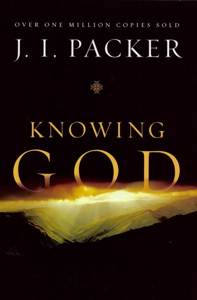
In his book, “Knowing God,” J.I. Packer gives a simple illustration which helps us better understand how godly wisdom works in our lives.

Packer writes:

If you stand at the end of a platform at York Station, you can watch a constant succession of engine and train movements which, if you are a railway enthusiast, will greatly fascinate you. But you will only be able to form a very rough and general idea of the overall plan in terms of which all these movements are being determined (the operational pattern set out in the working timetable, modified if need be on a minute-to-minute basis according to the actual running of the trains).

If, however, you are privileged enough to be taken by one of the higher-ups into the magnificent electrical signal-box that lies athwart platforms 7 and 8, you will see on the longest wall a diagram of the entire track layout for five miles on either side of the station, with little glowworm lights moving or stationary on the different tracks to show the signalmen at a glance exactly where every engine and train is. At once you will be able to look at the whole situation through the eyes of those who control it: you will see from the diagram why it was that this train had to be signalled to a halt, and that one diverted from its normal running line, and that one parked temporarily in a siding. The why and the wherefore of all these movements becomes plain once you can see the overall position.

Now, the mistake that is commonly made is to suppose that this is an illustration of what God does when he bestows wisdom: to suppose, in other words, that the gift of wisdom consists in a deepened insight into the providential meaning and purpose of events going on around us, an ability to see why God has done what he has done in a particular case, and what he is going to do next. People feel that if they were really walking close to God, so that he could impart wisdom to them freely, then they would, so to speak, find themselves in the signal-box; they would discern the real purpose of everything that happened to them, and it would be clear to them every moment how God was making all things work together for good. Such people spend much time poring over the book of providence, wondering why God should have allowed this or that to take place, whether they should take it as a sign to stop doing one thing and start doing another, or what they should deduce from it. If they end up baffled, they put it down to their own lack of spirituality.

Christians suffering from depression, physical, mental or spiritual (note, these are three different things!) may drive themselves almost crazy with this kind of futile inquiry. For it is futile: make no mistake about that. It is true that when God has given us guidance by application of principles he will on occasion confirm it to us by unusual providences, which we will recognize at once as corroborative signs. But this is quite a different thing from trying to read a message about God’s secret purposes out of every unusual thing that happens to us. So far from the gift of wisdom consisting in the power to do this, the gift actually presupposes our conscious inability to do it, as we shall see in a moment.

We ask again: what does it mean for God to give us wisdom? What kind of a gift is it?

If another transportation illustration may be permitted, it is like being taught to drive. What matters in driving is the speed and appropriateness of your reactions to things and the soundness of your judgment as to what scope a situation gives you. You do not ask yourself why the road should narrow or screw itself into a dogleg wiggle just where it does, nor why that van should be parked where it is, nor why the driver in front should hug the crown of the road so lovingly; you simply try to see and do the right thing in the actual situation that presents itself. The effect of divine wisdom is to enable you and me to do just that in the actual situations of everyday life. 

To drive well, you have to keep your eyes skinned to notice exactly what is in front of you. To live wisely, you have to be clear-sighted and realistic — ruthlessly so—in looking at life as it is. Wisdom will not go with comforting illusions, false sentiment, or the use of rose-colored glasses. Most of us live in a dream world, with our heads in the clouds and our feet off the ground; we never see the world, and our lives in it, as they really are. This deep-seated, sin-bred unrealism is one reason why there is so little wisdom among us—even the soundest and most orthodox of us. 

SOURCE: Knowing God (p. 102-104), Packer, J. I. (1993)  Intervarsity Press.

I Want a Pastor Who…

HeartI recently celebrated eight years serving as pastor of Living Oaks Baptist Church. My church family surprised me by having a party in place of our Sunday evening service. Folks shared testimonies of the many ways they had been blessed by God during our eight years together.

As I listened to their stories of appreciation for my service, a couple of things struck me. First, I was surprised at just how much they love me–more than I was aware. I never had a reason to doubt their love, support, or commitment; however, I had never really considered their feelings for me. I cannot begin to describe the overwhelming joy that filled my heart as I listened to their wonderful expressions of love.

I was equally surprised as each person shared how they had been touched by a specific event. It was surprising–I would have never guessed that those moments we spent together were so meaningful. As a pastor, you think you will be remembered for your powerful sermons, great vision, and strong leadership, and even though they were thankful for these, that was not their main focus. Late night visits at the emergency room, canceled family plans to be by their side after a loved one had died, calls offering help while their spouse was out-of-town, or just being available at their time of need were just a few of things they listed. I remember sitting there thinking, “God, I never realized just how much church members want a pastor, a shepherd, and a friend for physical, mental, emotional, and spiritual needs.

I am thankful for the way God has gifted me with a pastor’s heart. I am thankful for the godly men He placed in my path to train me up in the proper ways of ministry. I am thankful that early on in my ministry I learned that “If you want to be a shepherd, you have to smell like the sheep.” That one statement alone changed my outlook on pastoring. I pray, study, and work hard to prepare sermons and provide direction and leadership for the church. However, none of those things are important if the members do not believe that their pastor loves them, sacrifices for them, and protects them like they are his own family.

I was reminded of these things as I read an article by Thom RainerTen Things Church Members Desire in a Pastor.” It is a simple list that should help almost every pastor in better understanding what our members really need from their pastor.

Rainer writes:

Many of my articles come from the perspective of pastors. That will not change in the future. I am an advocate of pastors and I desire God’s best for them. I have no plans to change my advocacy role.

As a change of pace, however, I recently asked a few hundred laypersons to write down what they desired of a pastor. Their responses were open-ended, and there was no limitation on the number of items they could list. Though my approach was not scientific, these laypersons did represent over sixty churches.

Here are their top ten responses in order of frequency. Since many of them gave one or more sentences as a response, I can provide a representative comment by each of the responses.

  1. Love of congregation. “If we know that our pastor loves us, everything else falls in place. If he doesn’t, nothing else matters.”
  2. Effective preaching. “I don’t have any expectation that my preacher be one of the best in the world, I just want to know that he has spent time in the Word each week to teach us effectively and consistently.”
  3. Strong character. “No pastor is perfect, but I do want a pastor whose character is above reproach on moral, family, and financial issues.”
  4. Good work ethic. “I don’t want either a workaholic pastor or a lazy pastor.  Unfortunately, our last two pastors have been obviously lazy.”
  5. Casts a vision. “Our church has so much possibility; I want to hear what we will do to make a difference in our community and the world.”
  6. Demonstrates healthy leadership. “Most of the pastors in my church have demonstrated a good balance; they have been strong leaders but not dictators.”
  7. Joyous. “Our current pastor is a man of joy. His joy and enthusiasm are contagious. I love him for that!”
  8. Does not yield to critics. “I know that every pastor serving today has his critics. And I know it’s tough to deal with them. I just want these pastors to know that we supporters are in the majority. Please don’t let the minority critics dictate how you lead and serve.”
  9. Transparent. “Every pastor that I have had has been open and transparent about the church and the direction we are headed. It sure has made our church healthier.”
  10. Models evangelism. “Our pastor is passionate about sharing the gospel. His heart and attitude are contagious.”

What do you think about this list? What would you add from the perspective of either a pastor or a layperson?

Source: “Ten Things Church Members Desire in a Pastor.”

Should’ve Been Me

Here is a great video by Citizen Way, “Should’ve Been Me.”